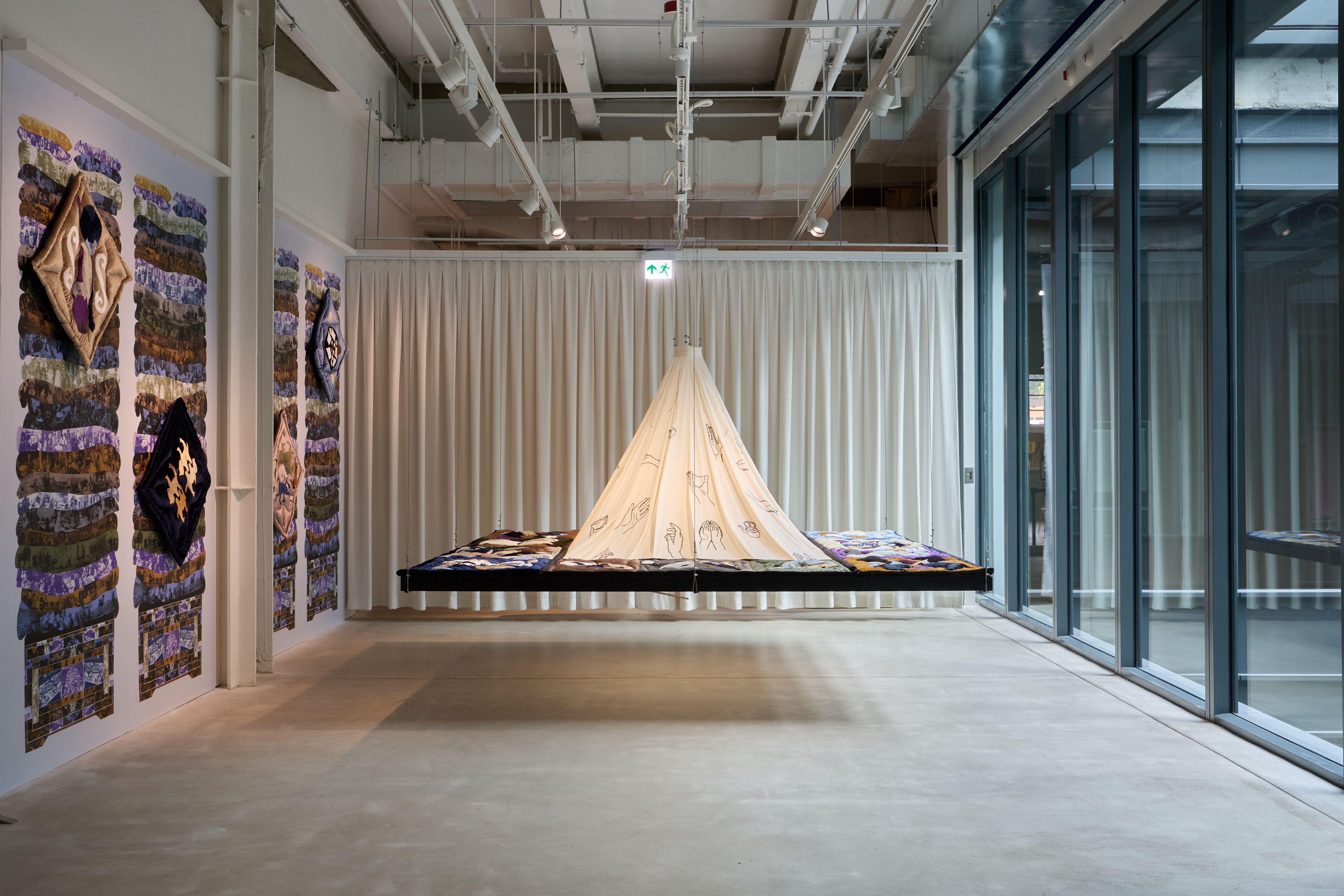
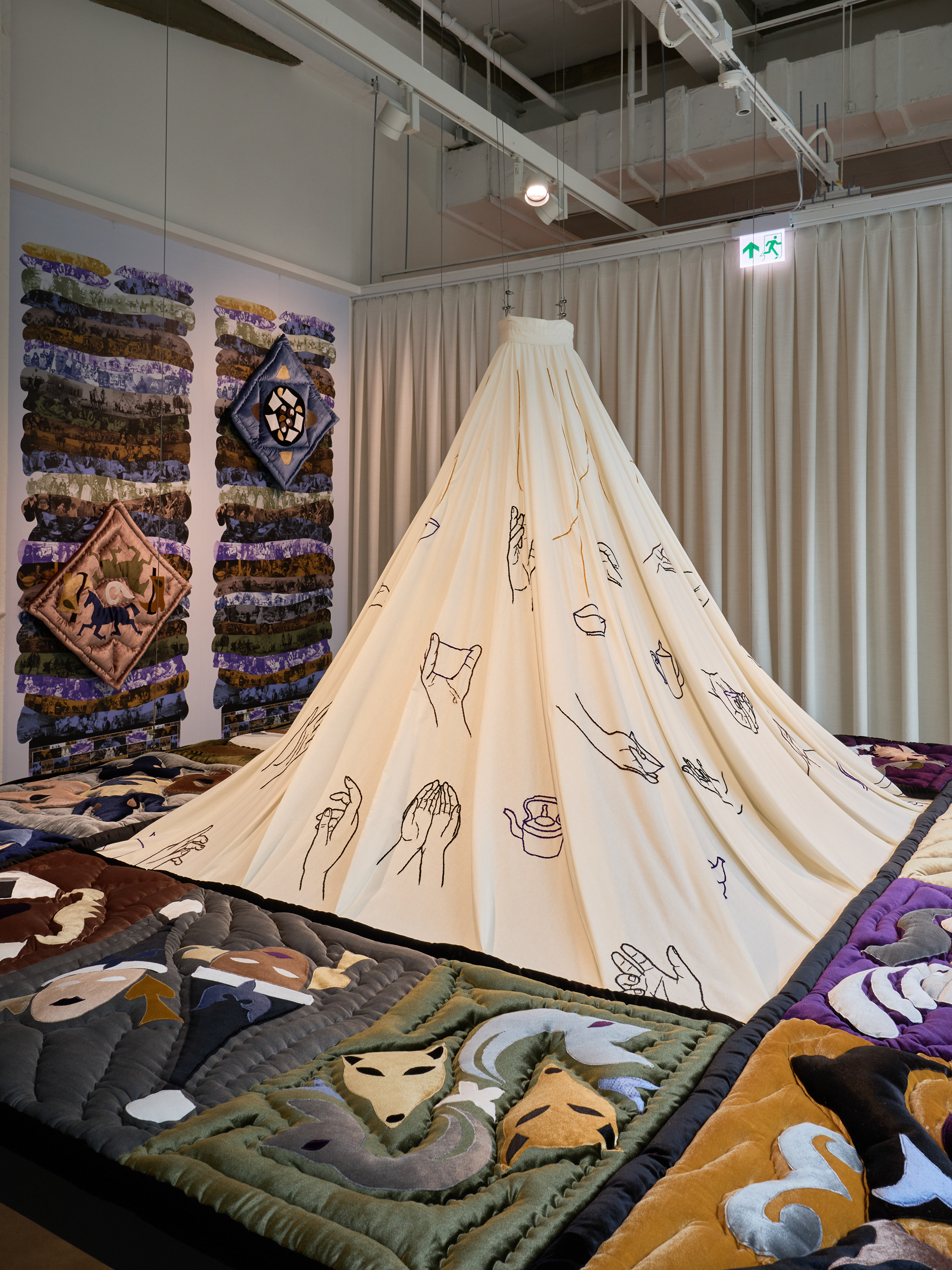
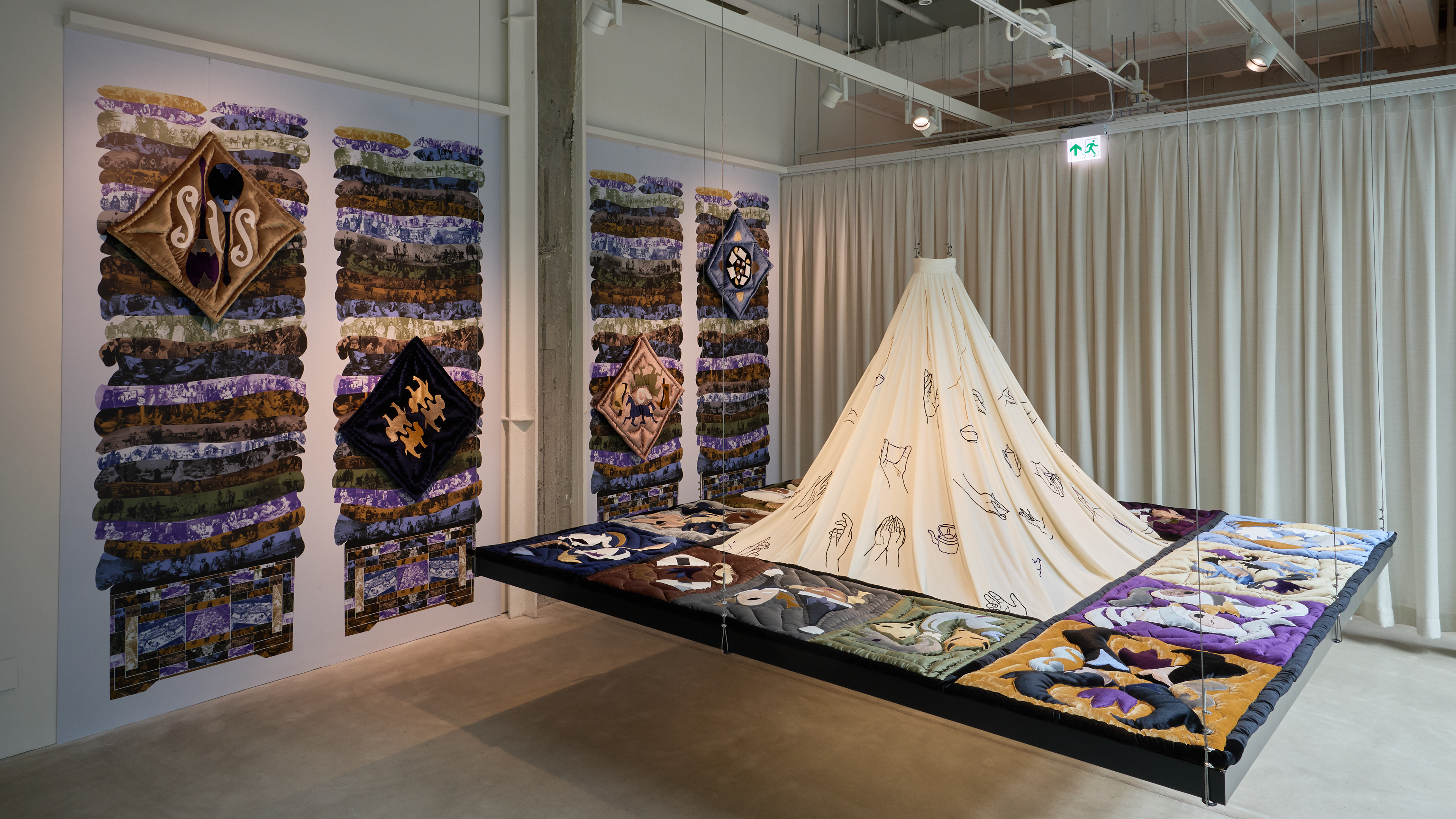
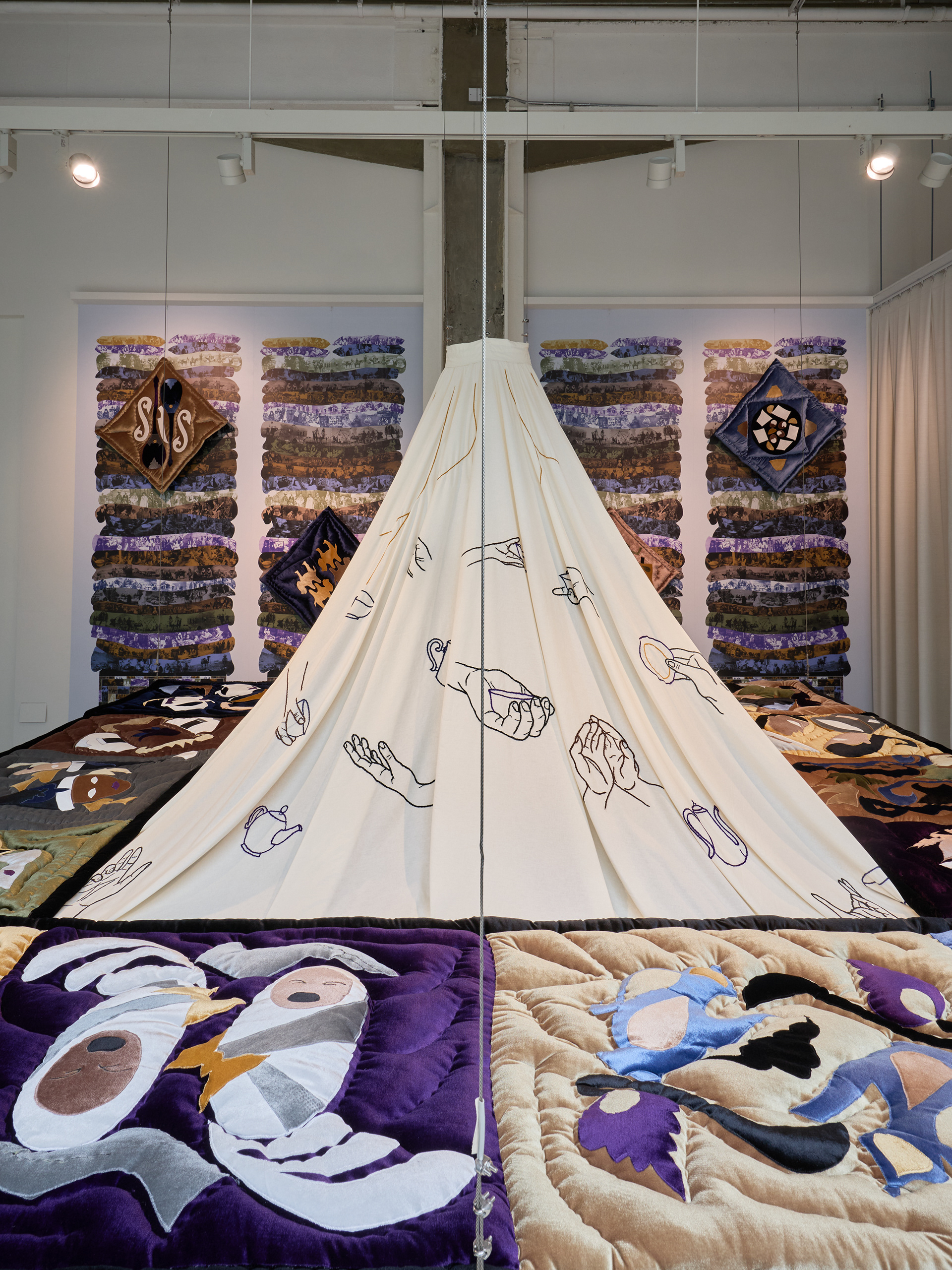
Dastarkhan (Her Skirt), 2024
Quilted Fabric, hand-embroidered cotton and collage wallpaper.
Commissioned for "Lining Revealed - A Journey Through Folk Wisdom and Contemporary Vision" at CHAT/ mill6chat, Hong Kong
This work is inspired by the Central Asian Dastarkhan, a traditional gathering space where family and guests come together to share food, stories, and connection. More than a meal, Dastarkhan is a living tradition that carries cultural values, hospitality, and a sense of belonging across generations. This work is a tribute to the mothers, grandmothers, aunts, and sisters who create the warmth and care that make Dastarkhan possible. Their labour often goes unnoticed, yet they are the keepers of tradition, community, and home.
I created a wearable Dastarkhan that transforms the tablecloth into a skirt inspired by traditional Kazakh quilts and ornaments. Through hand-made appliqué imagery, I tell the story of an everyday woman and the world she creates through care, memory, and connection. The symbols reference landscapes, household objects, plants, animals, and daily experiences that shape women’s lives and family histories.
Made by hand with my mother, this work is deeply personal. It brings together our shared stories and reflects my interest in using traditional craft to explore memory, identity, and cultural inheritance. I wanted to celebrate women not as figures tied to domestic responsibilities, but as powerful world-makers whose care, creativity, and knowledge hold families and communities together.
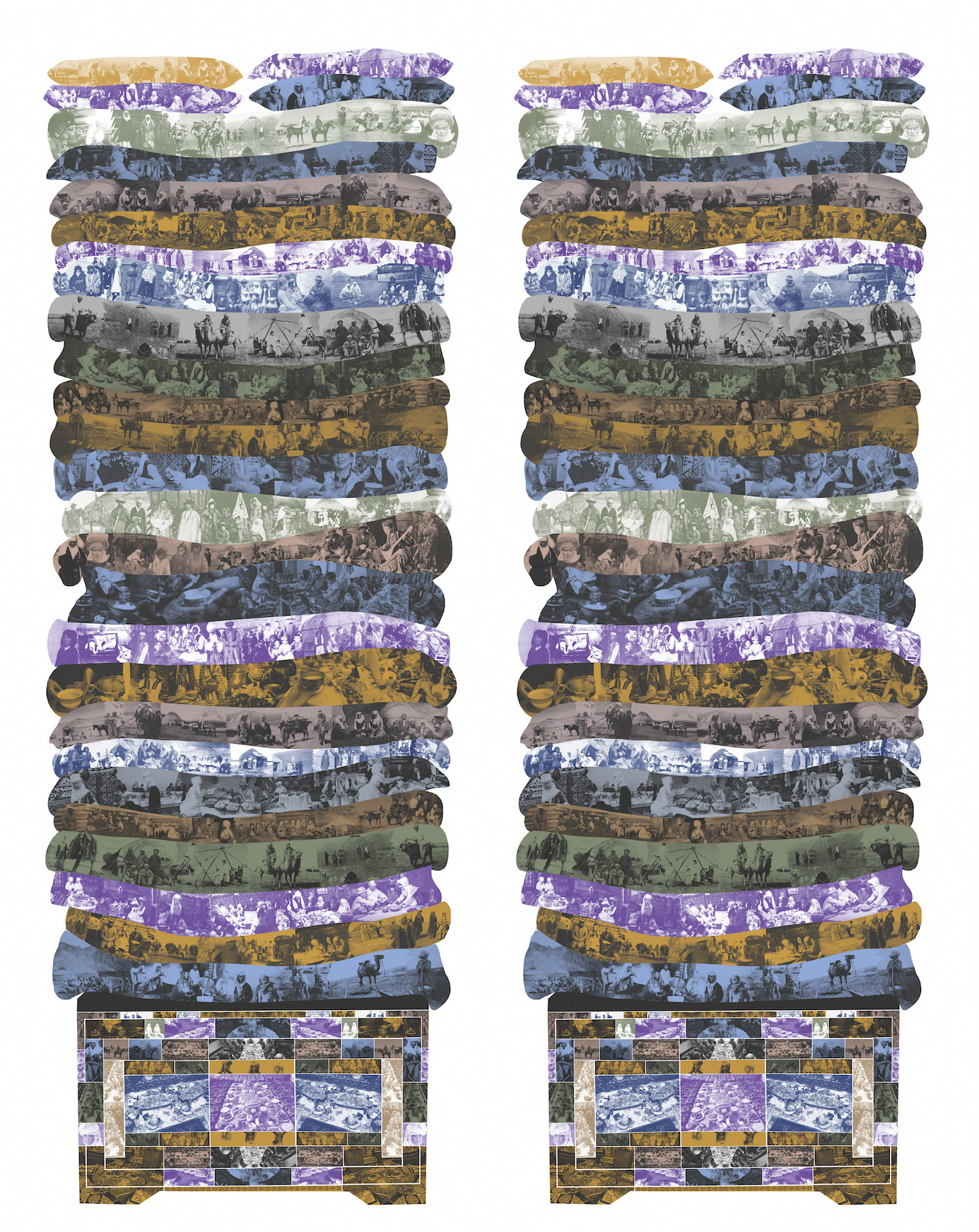
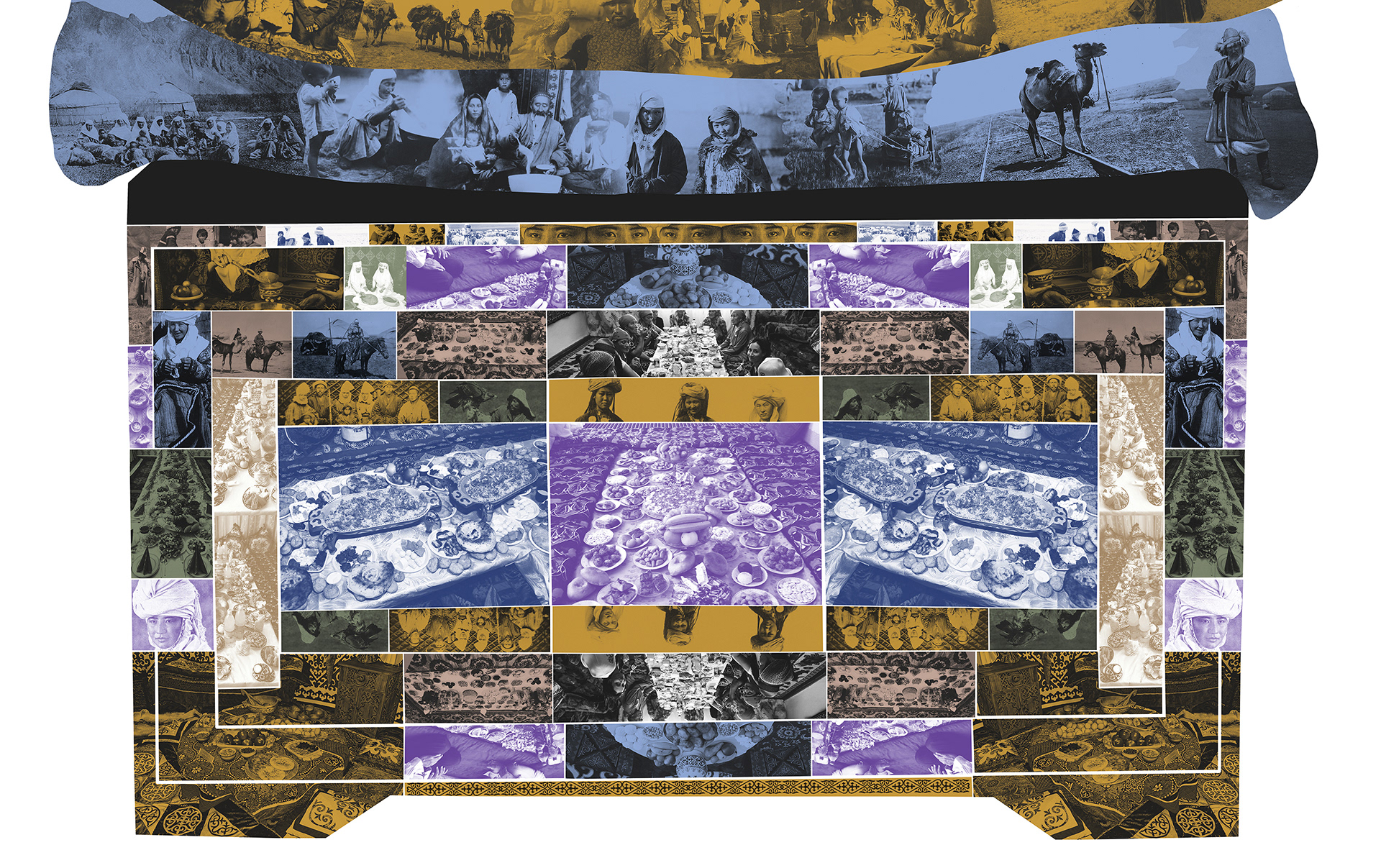
The wallpaper is designed as a collage inspired by a traditional storage chest topped with neatly stacked quilts, a familiar feature of many Central Asian homes. The collage combines archival photographs of nomadic families with contemporary family photographs showing people gathered around the Dastarkhan. Bringing these images together creates a visual connection between past and present, highlighting the continuity of hospitality, family traditions, and communal gathering across generations.
Image Courtesy CHAT, Hong Kong
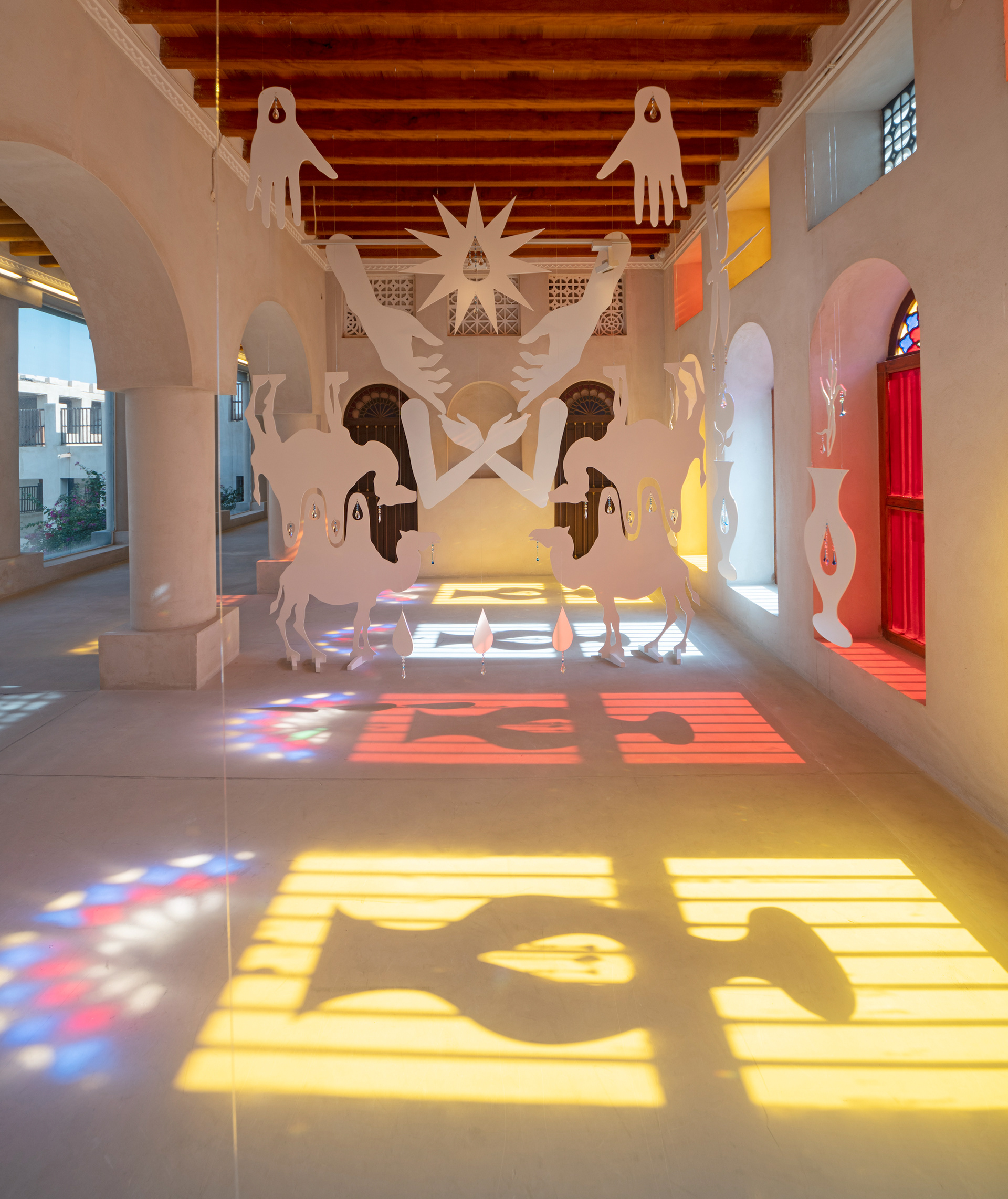

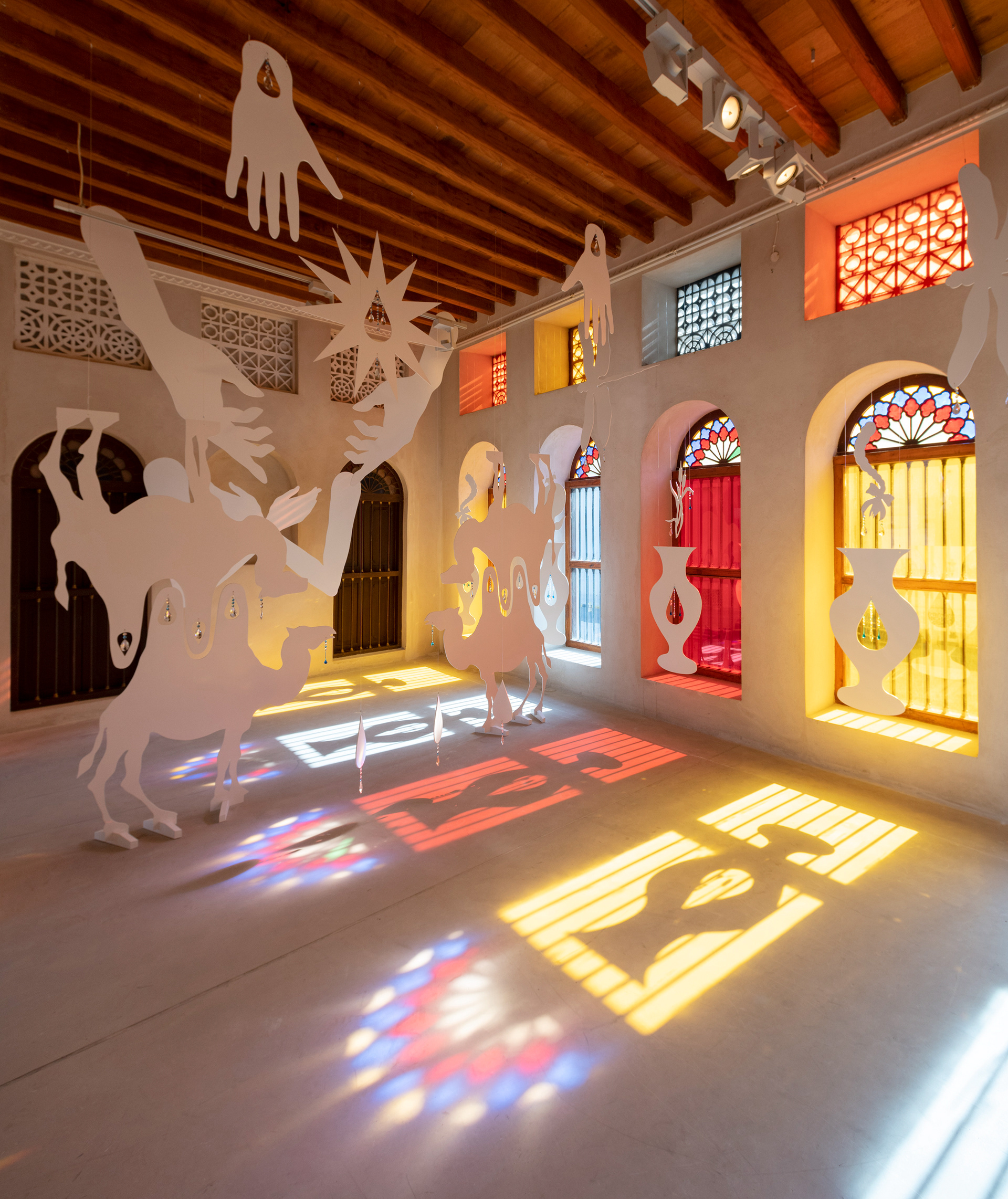
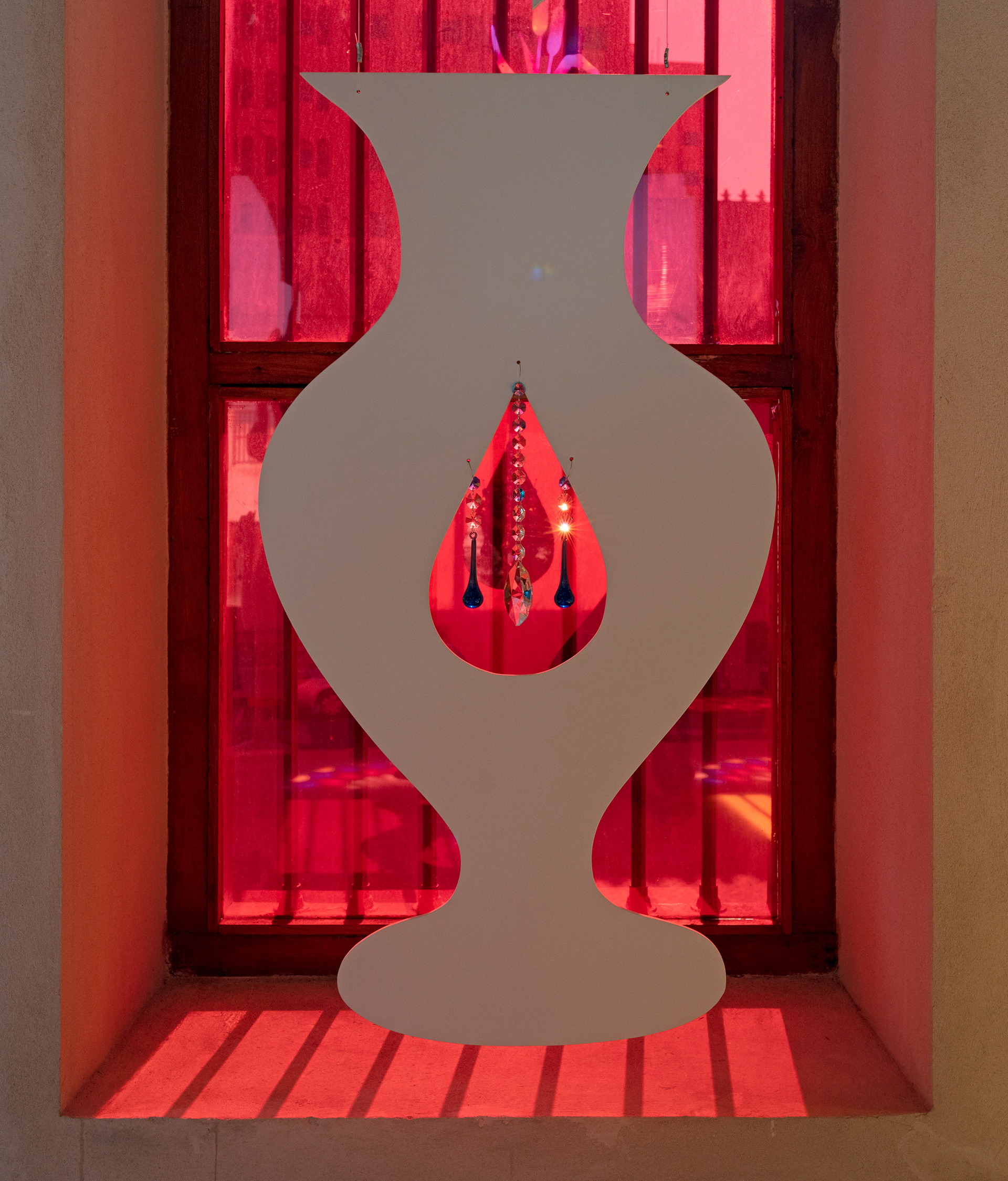

Treasured Shadows, 2022
Site-specific installation: wood cutouts and glass chandelier crystals.
Sharjah Biennial 15, Thinking Historically in the Present, Sharjah, UAE
Curated by Hoor Al Qasimi
Aziza Shaden’s new project for Sharjah Biennial 15 is a woodwork installation that inhabits and transforms one of the rooms of the heritage house Bait Al Serkal into an oasis of dreams. The installation is a manifestation of the artist’s personal introspection into her present and past, as she reflects on her memories and upbringing in Uzbekistan. Drawing inspiration from The Silk Road, Treasured Shadows uses elements like wooden silhouettes and glass chandelier crystals to create a theatre set of the artist’s inner world and formative childhood memories.
Treasured Shadows features fragments of Shaden’s most precious memories from throughout her life, including camels, pomegranates, vases, and dragonflies. The imagery of her mother’s hands is particularly poetic, as it symbolises memories of being held, cared for, and embraced as a child. Such symbols emphasise not only the visual but the embodied memories that are carried and stored within the body. Therefore, Treasured Shadows highlights the beauty of emotional narration and self-reflection through creating and collating visual elements which represent the artist’s upbringing in Uzbekistan.
Shaden's memories transform into silhouettes and shadows, but when assembled and decorated with chandelier crystals, they become like treasures and precious jewels. The crystals recall the interiors of Uzbek houses that the artist would visit in her childhood, where chandeliers gracefully highlight the homeowner’s luxury, taste and wealth. Featuring this social practice, Shaden celebrates the richness and reverie of one’s memories. By assembling such precious objects and memories, Shadenova constructs an immersive stage set of her treasures. The visitors are welcomed into this space to experience the artist’s personal world.
The installation begins by occupying the niches and recesses of the rooms. Silhouettes of hands cross together from the two door niches that protect the central niche. This central niche symbolises the chest and heart of the artist. The centre of the room is guarded by four camels and objects that have been suspended from the ceiling. The sidewalls and recesses of the room also showcase silhouettes of vases, a distinctive and enduring element of Shaden’s practice. Light dances through the glass chandelier crystals and the stained-glass windows of Bait Al Serkal, transforming the installation’s atmosphere into a space of vision, memory and awe.
Text by Sharjah Art Foundation
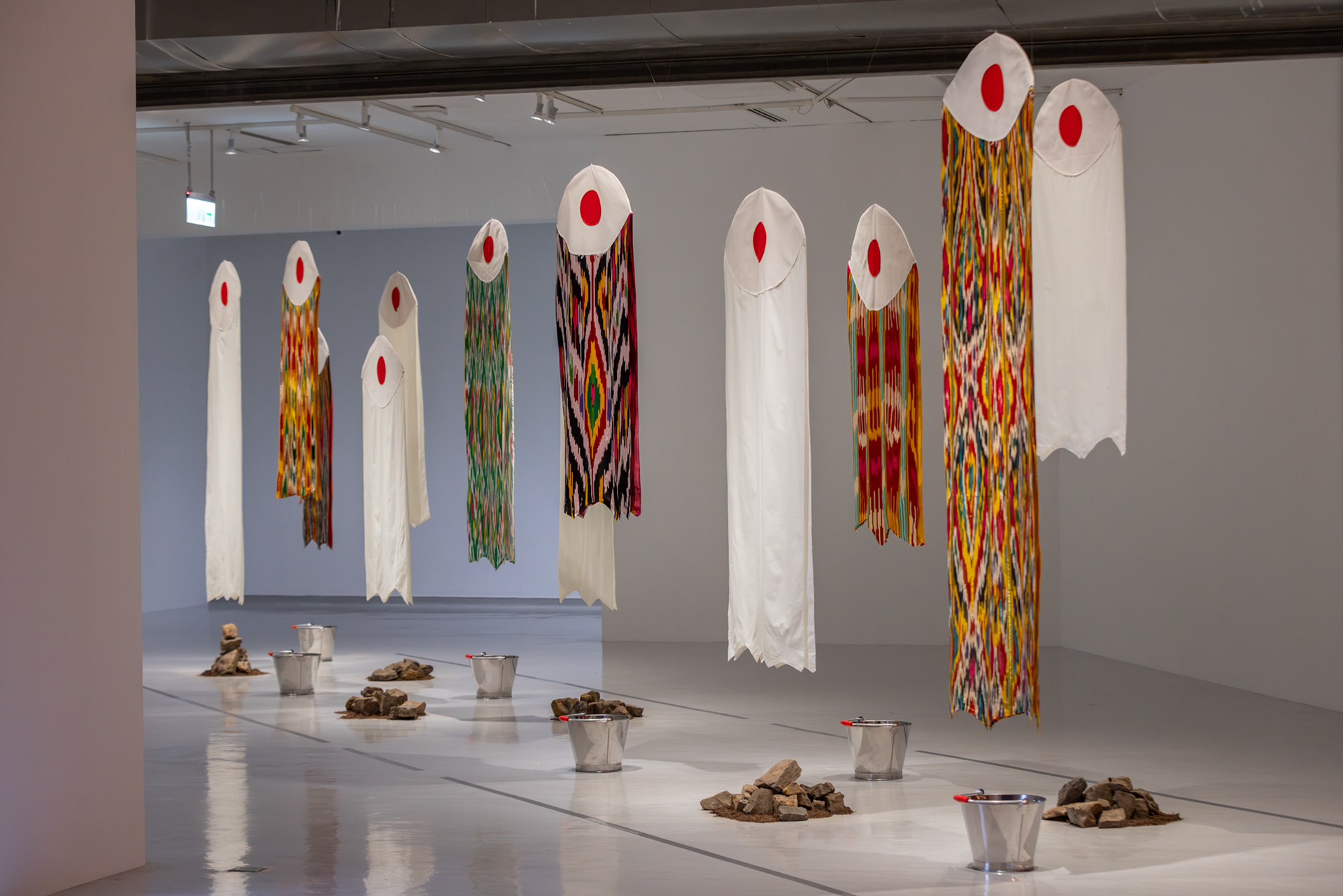
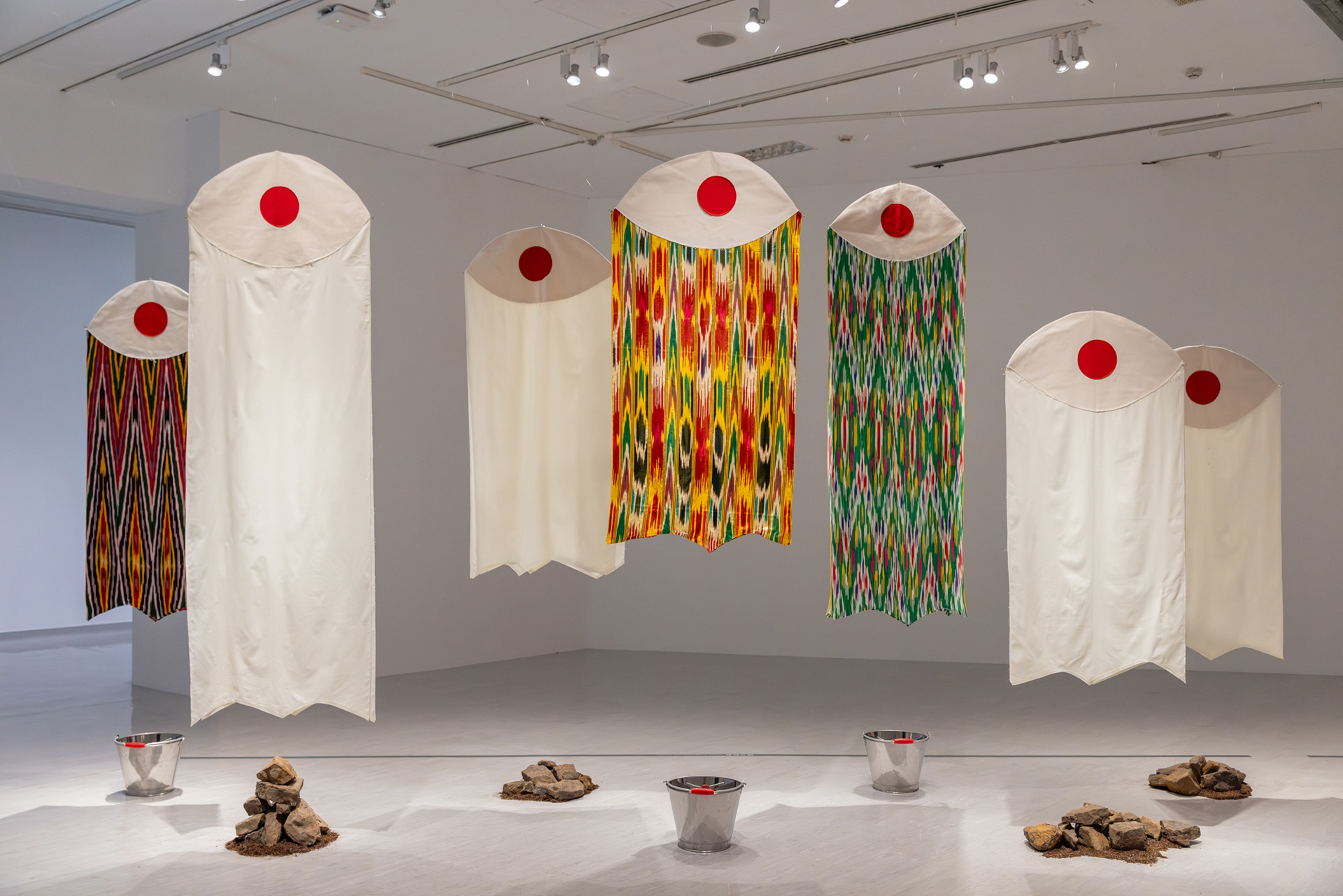
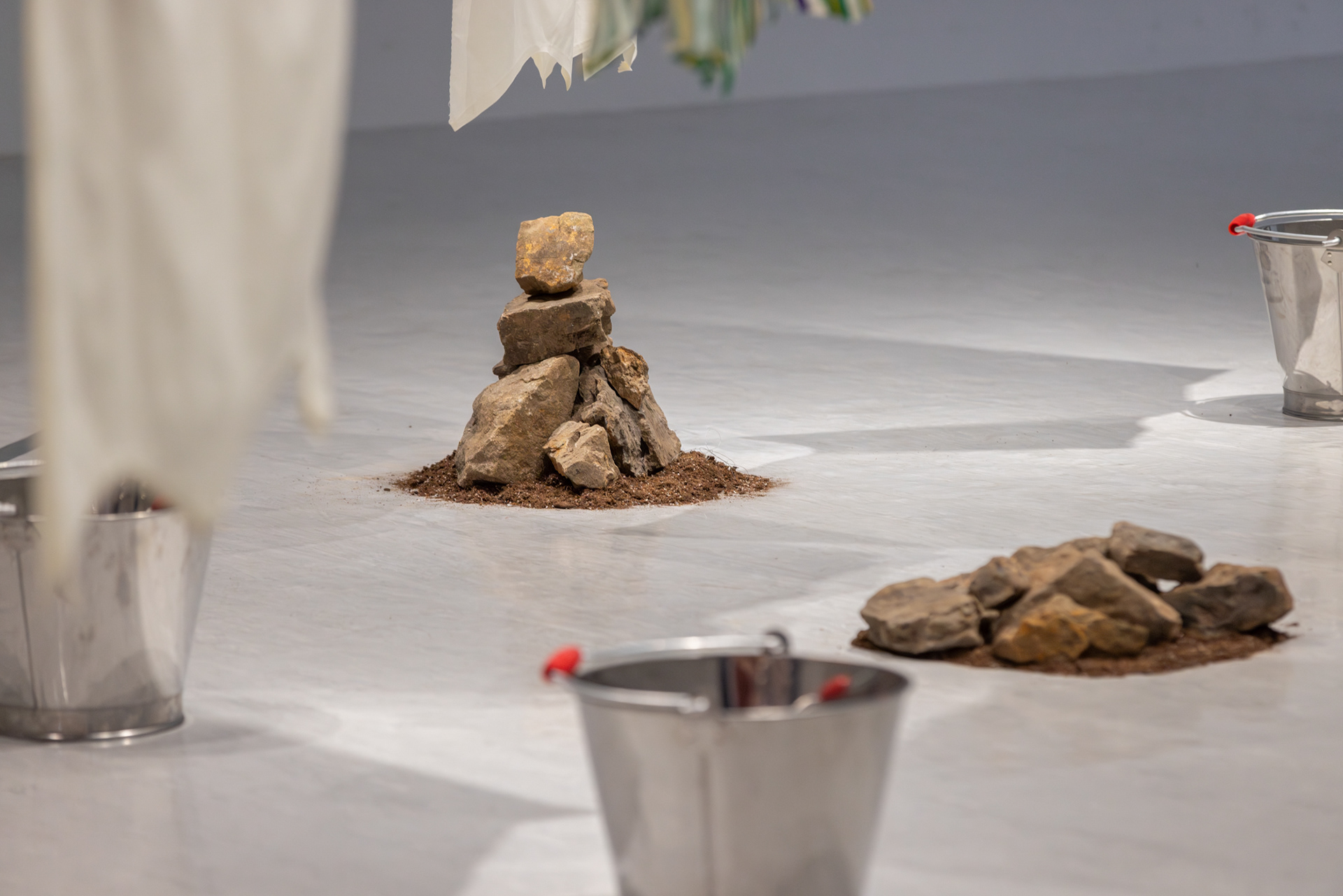
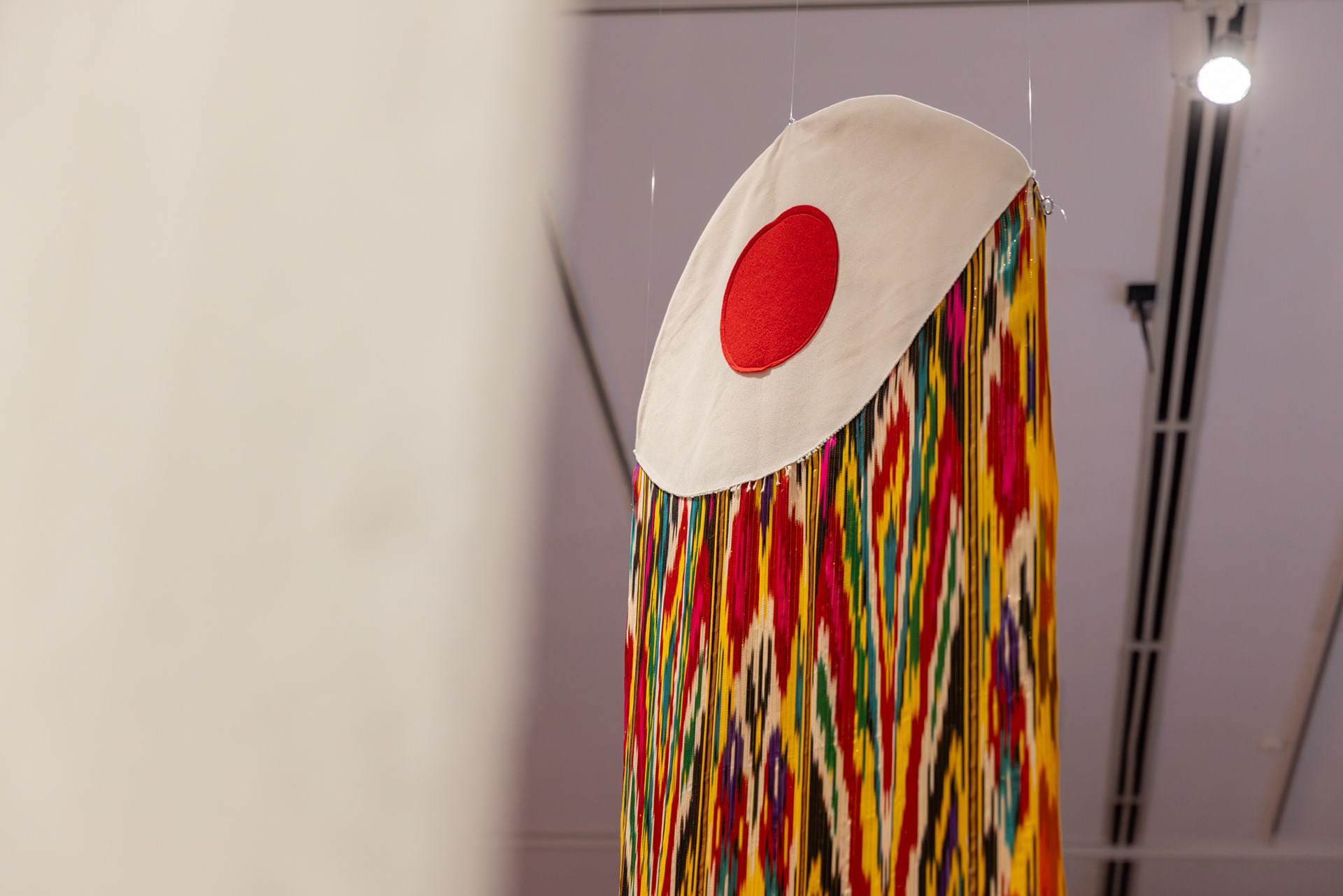
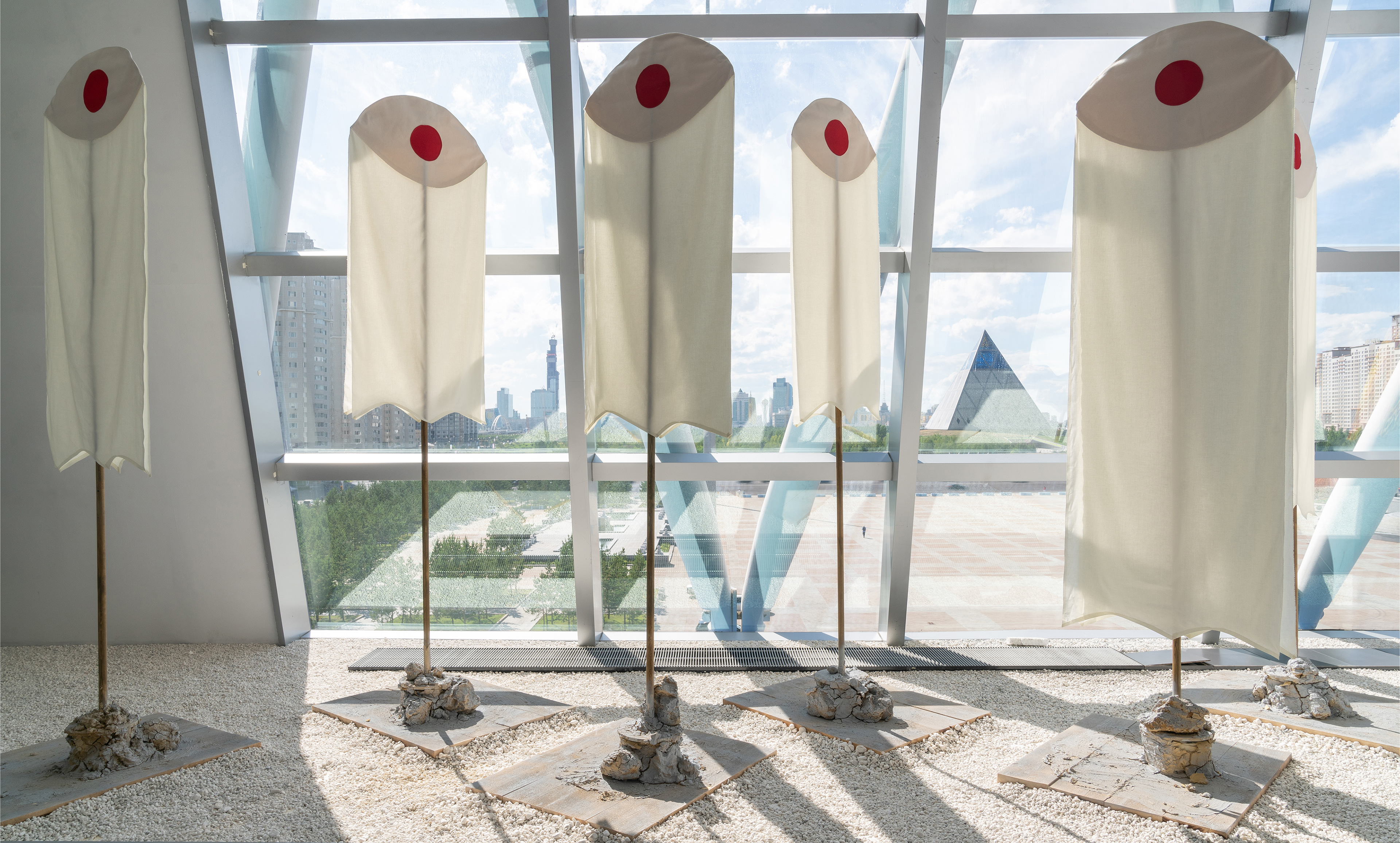
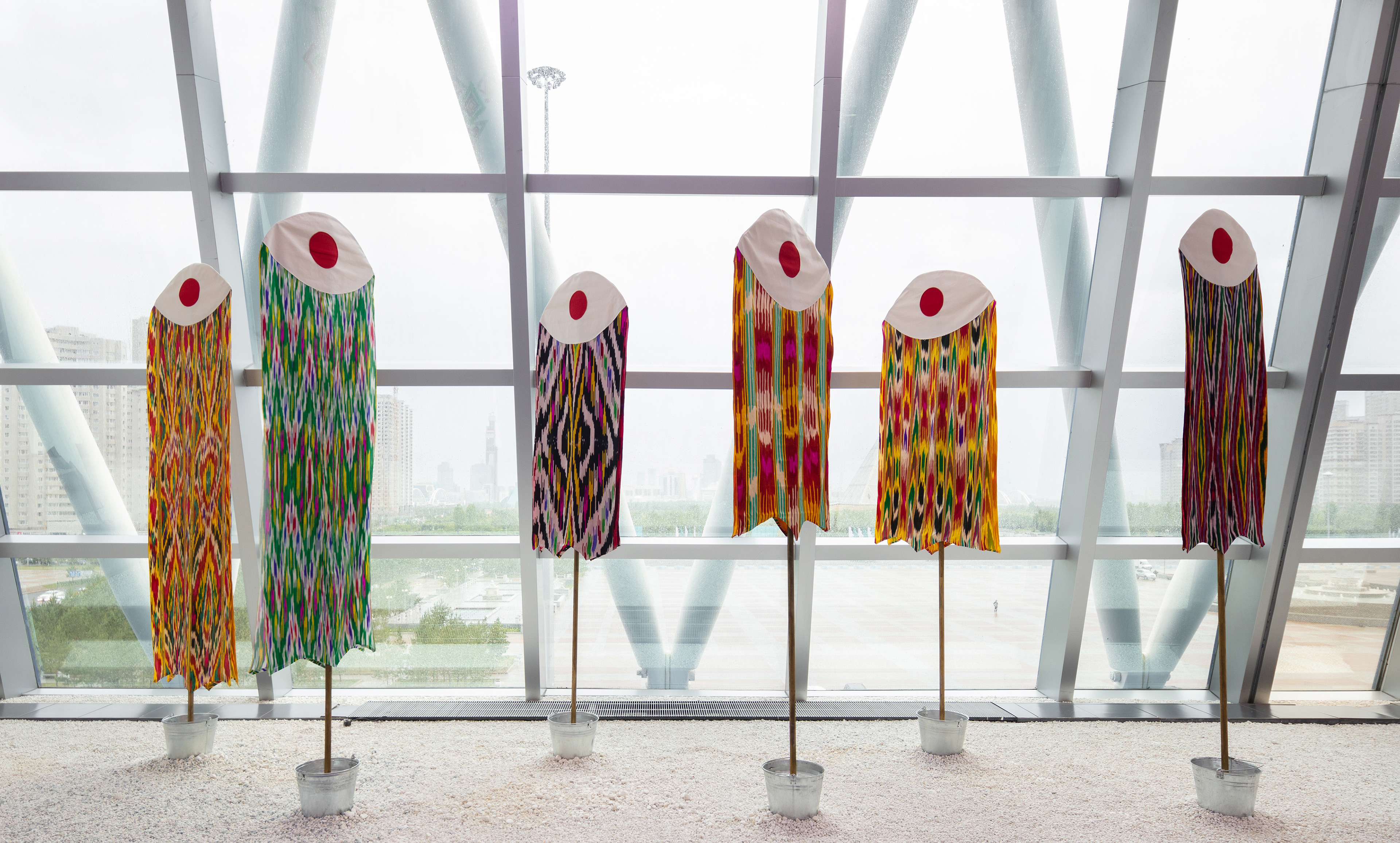
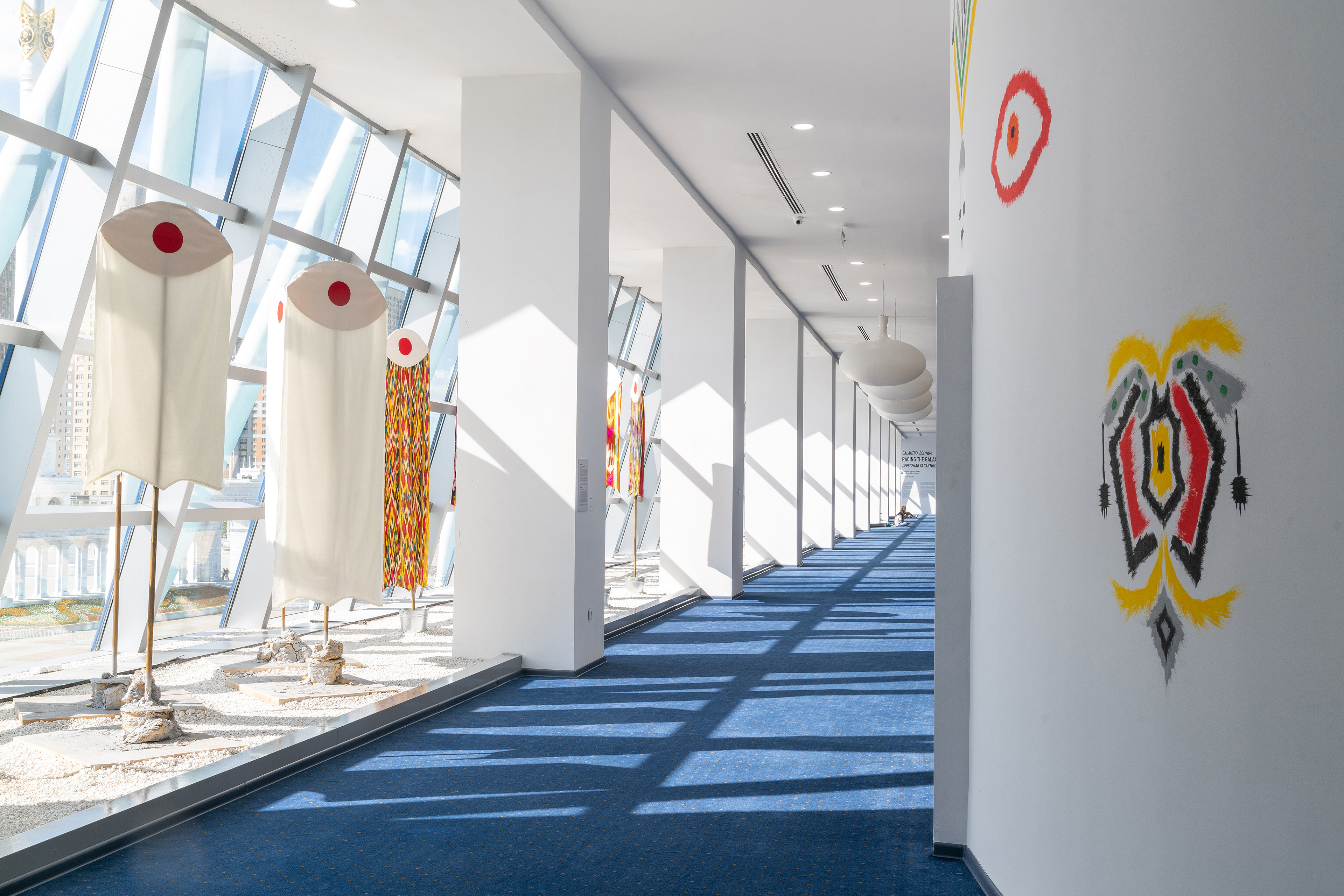
Textures of Grieving, 2019
Felt, wool & silk ikhat textiles, galvanised buckets with water, stones, and sand
Textures of Grieving began as a much larger project. I originally imagined it as a film documenting a series of large-scale "Ikat Eye" installations placed across the landscapes of the Aral Sea. Due to limitations of time, distance, and resources, the project took shape as a smaller static installation instead. Although it represents only a fragment of the original vision, it remains an important step in an ongoing body of work that I hope to return to in the future.
The work explores the connection between environmental loss and cultural identity. Growing up in Central Asia, the story of the Aral Sea has always felt deeply personal to me. Its gradual disappearance mirrors my own concerns about the slow erosion of cultural memory, language, and traditions in a rapidly changing world.
The Aral Sea is one of the world's most significant ecological disasters, caused by the diversion of rivers for large-scale cotton production during the Soviet era. Through these works, I reflect on loss, absence, and the traces that remain behind. The installation is both a meditation on a damaged landscape and a reflection on what happens when people become disconnected from the places, histories, and cultures that shape them.
Images: 1-4, How to Hold your Breath' Asian Art Biennial 2024. Organised by the National Taiwan Museum of Fine Arts in Taichung.
Curated by Fang Yen Hsiang, Anne Davidian, Merv Espina, Haeju Kim, and Asli Seven
Image courtesy of the National Taiwan Museum of Fine Arts.
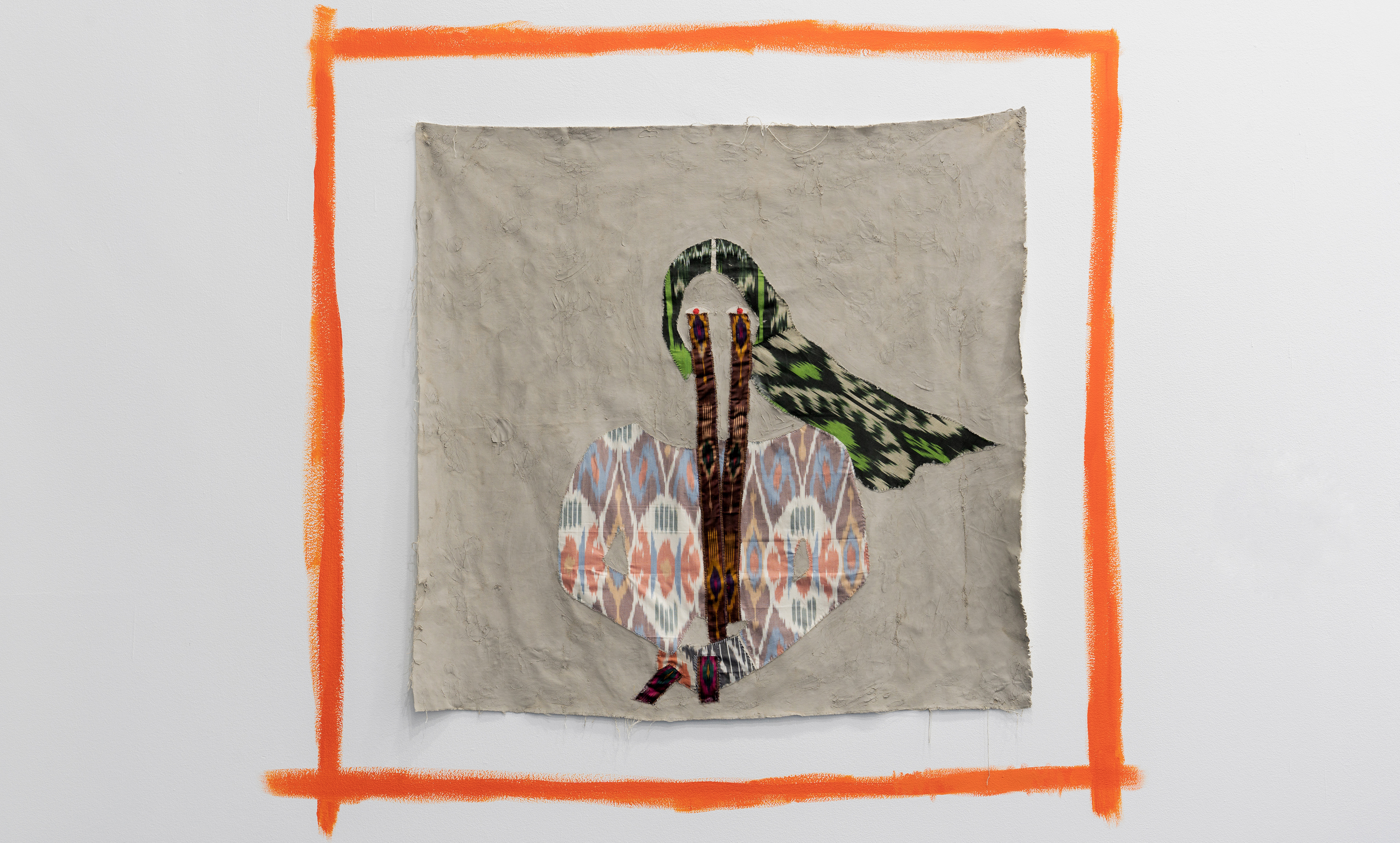
Images: 5-8, Racing The Galaxy, Palace of Independence, Astana, Kazakhstan.
Curated by Jerome Sans and Dina Baitassova
Photography by Saparlas
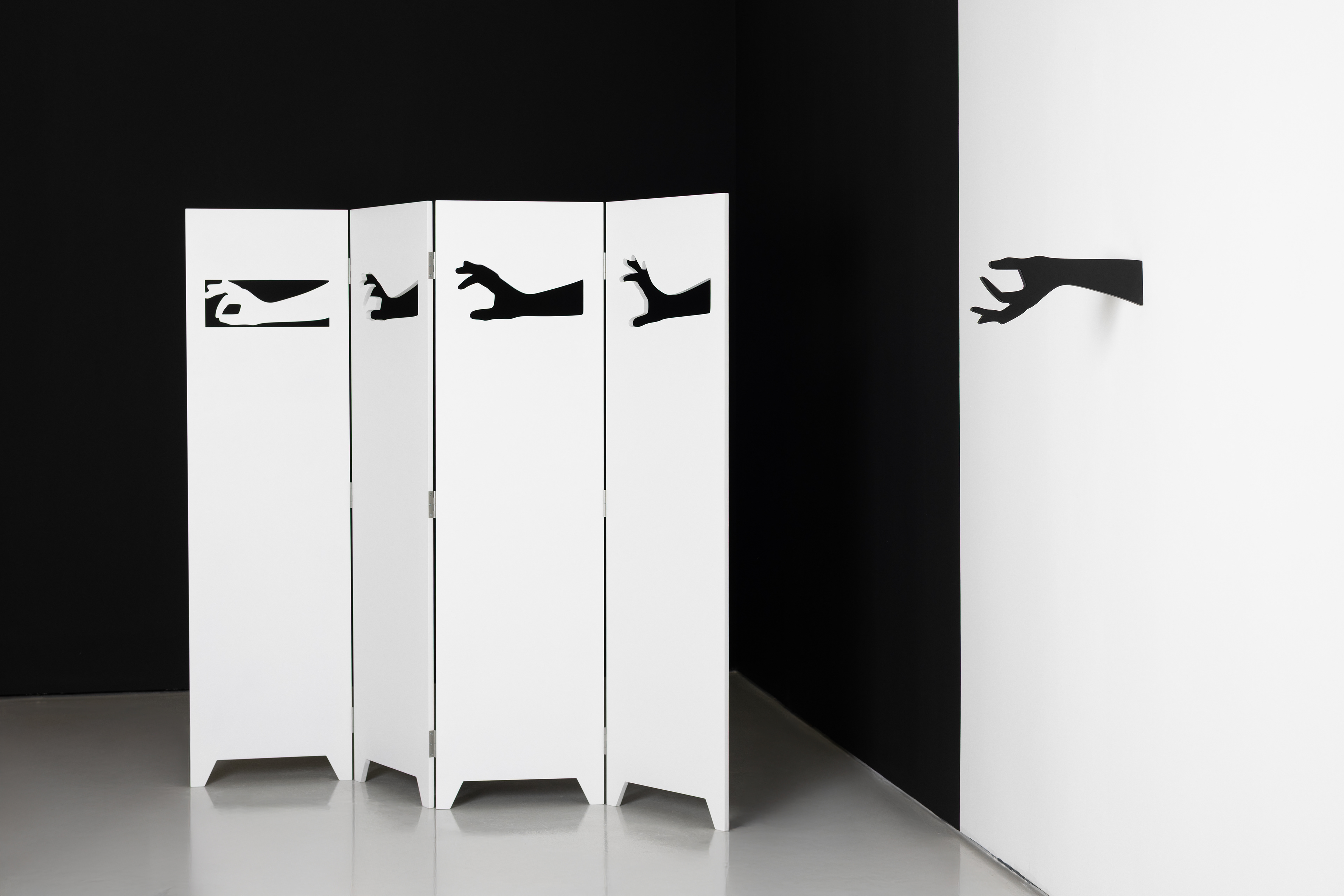
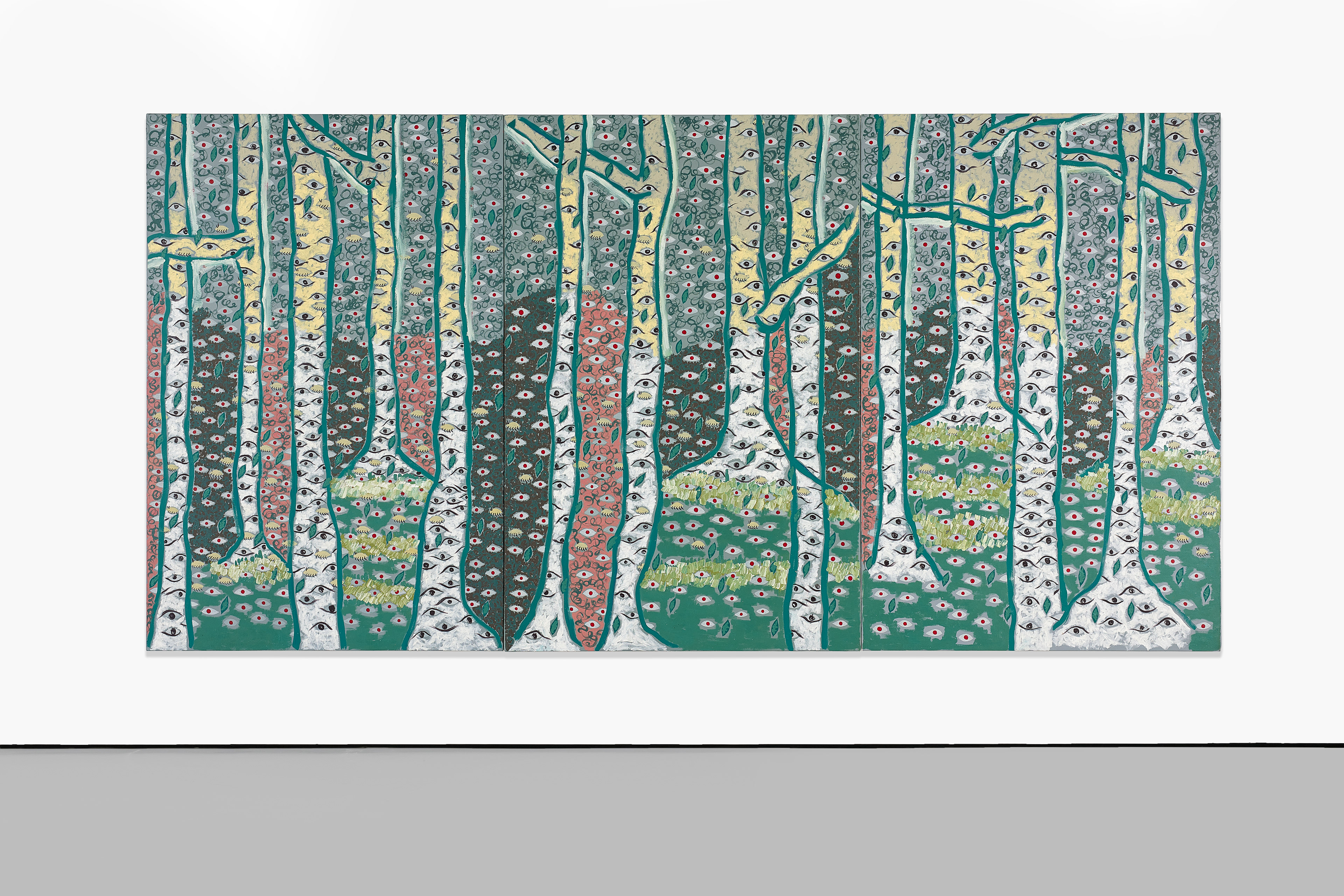

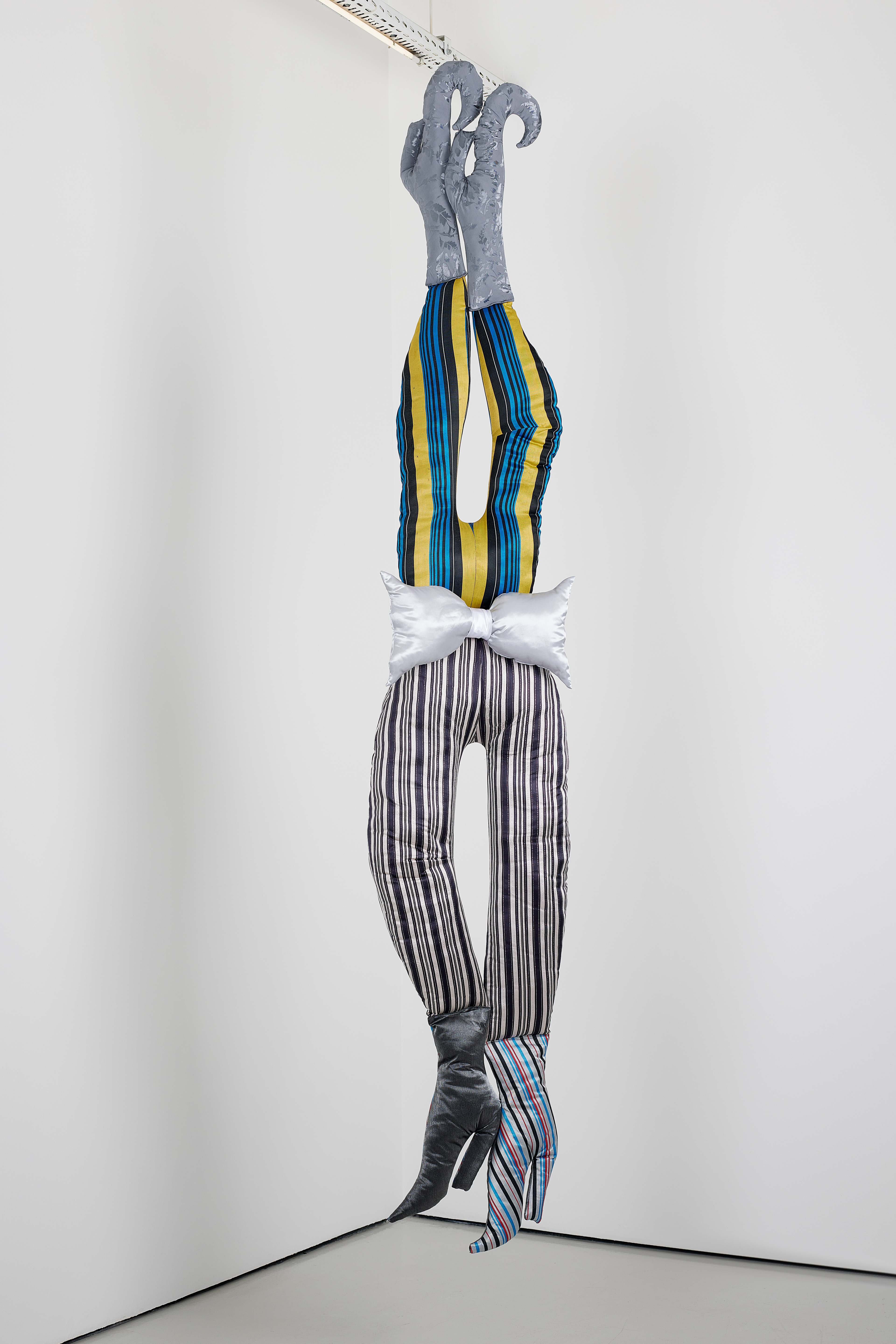

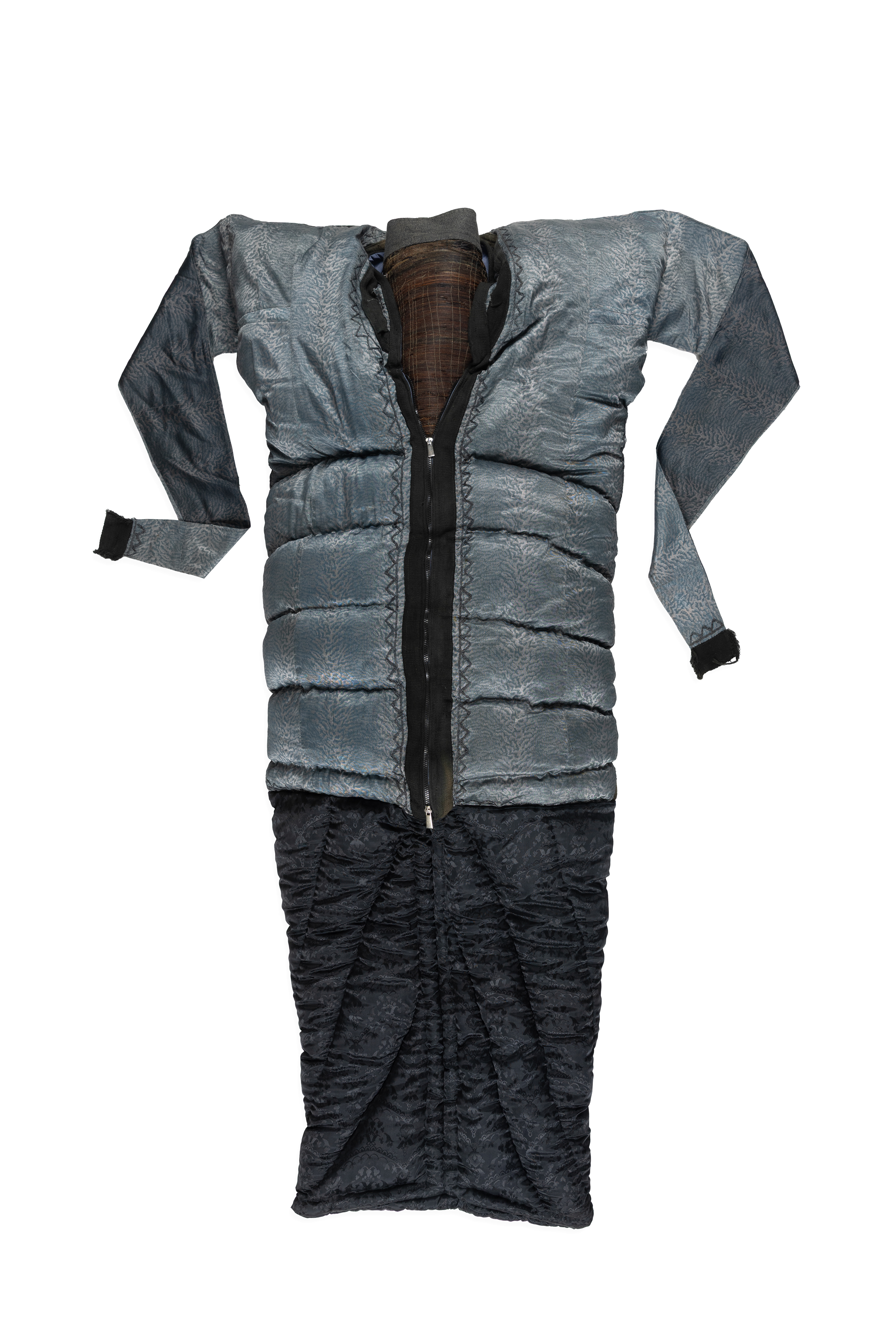
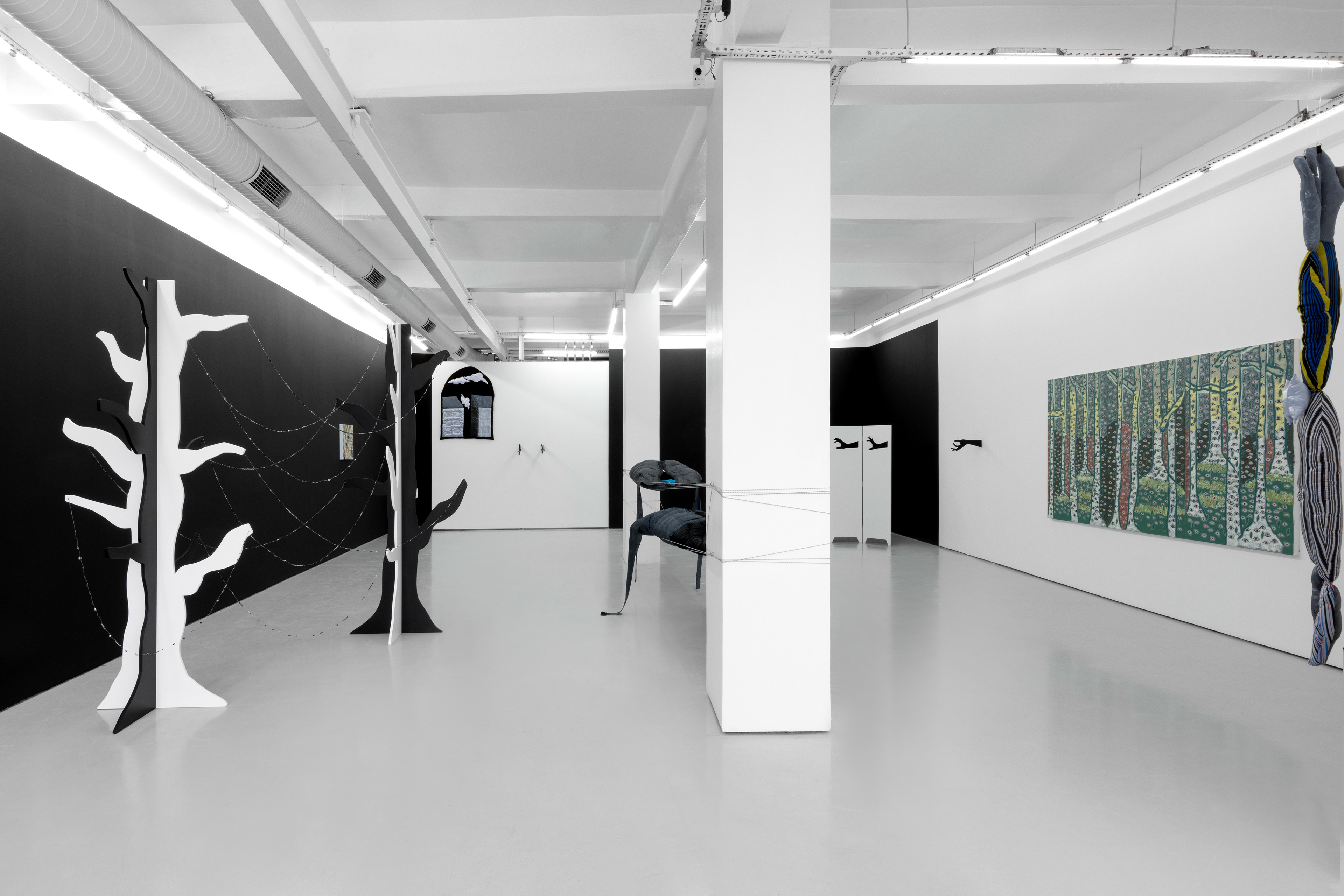
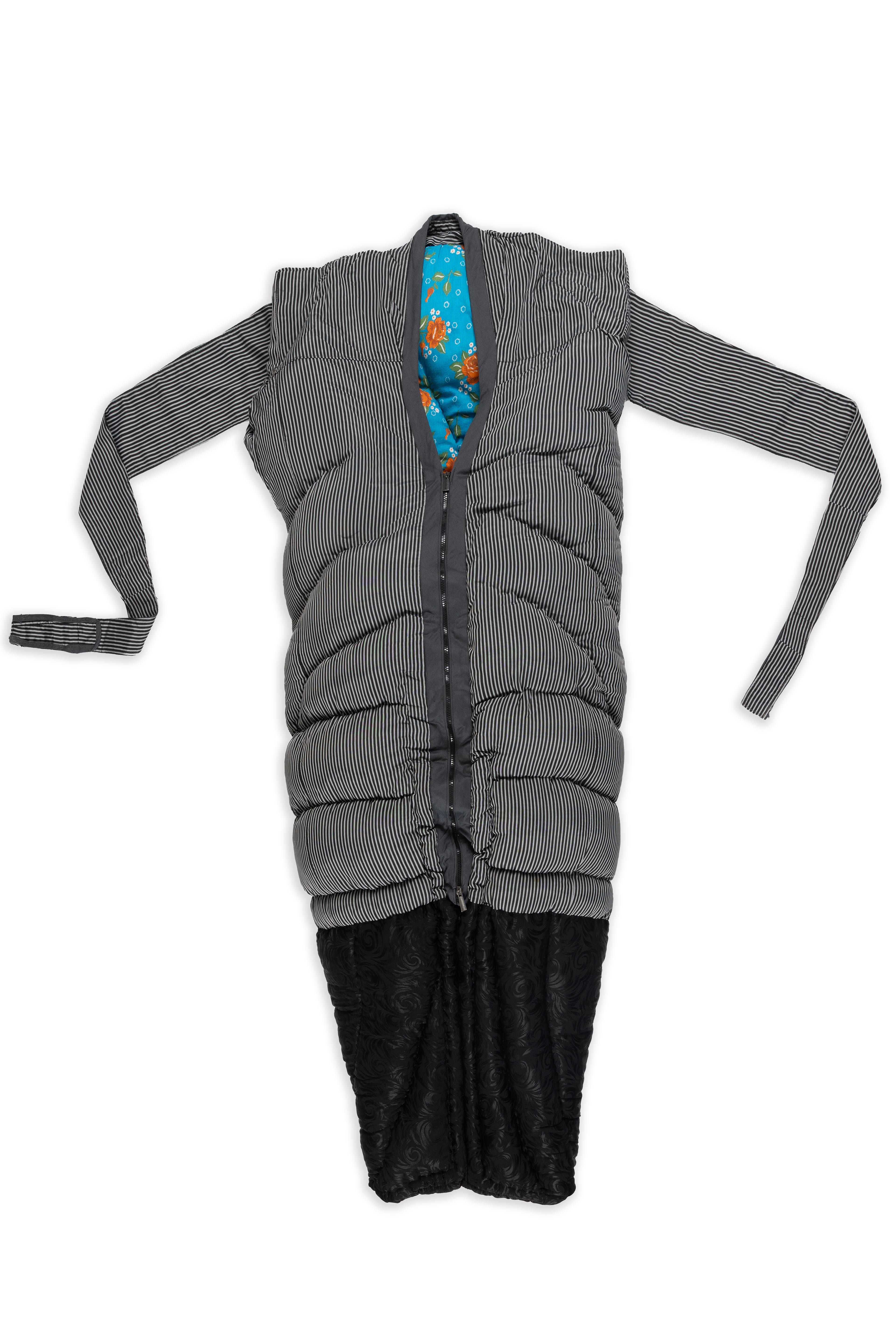
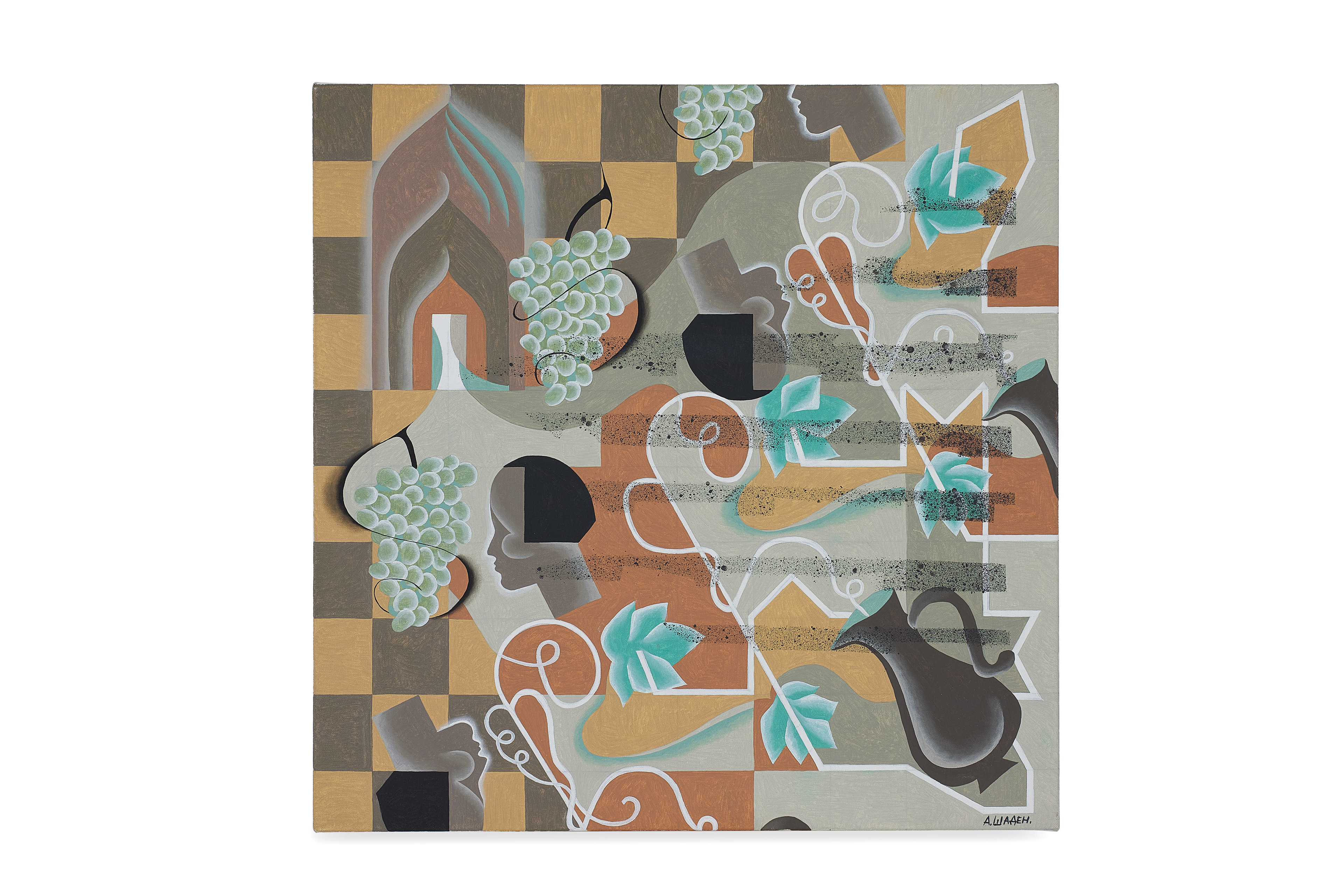


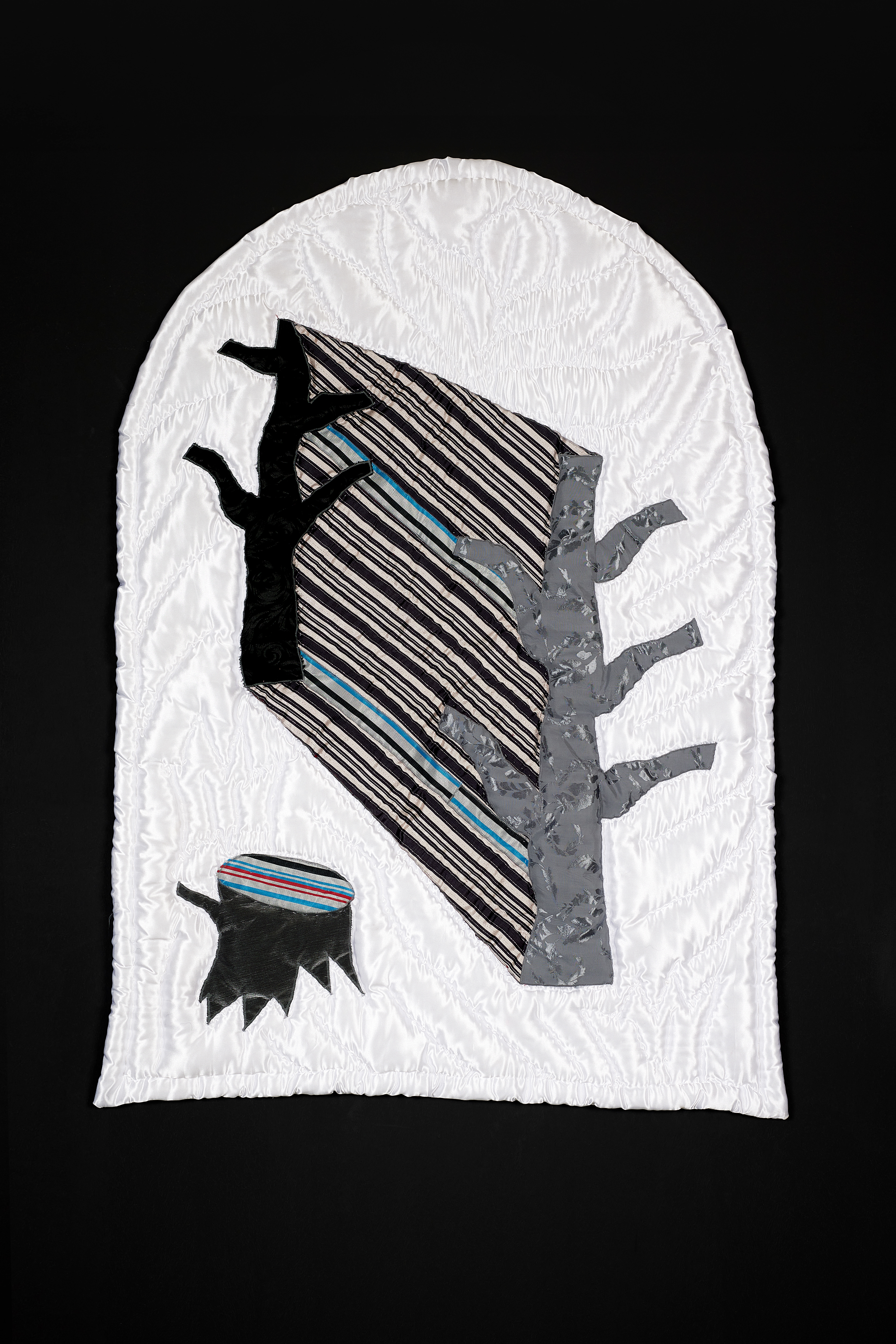
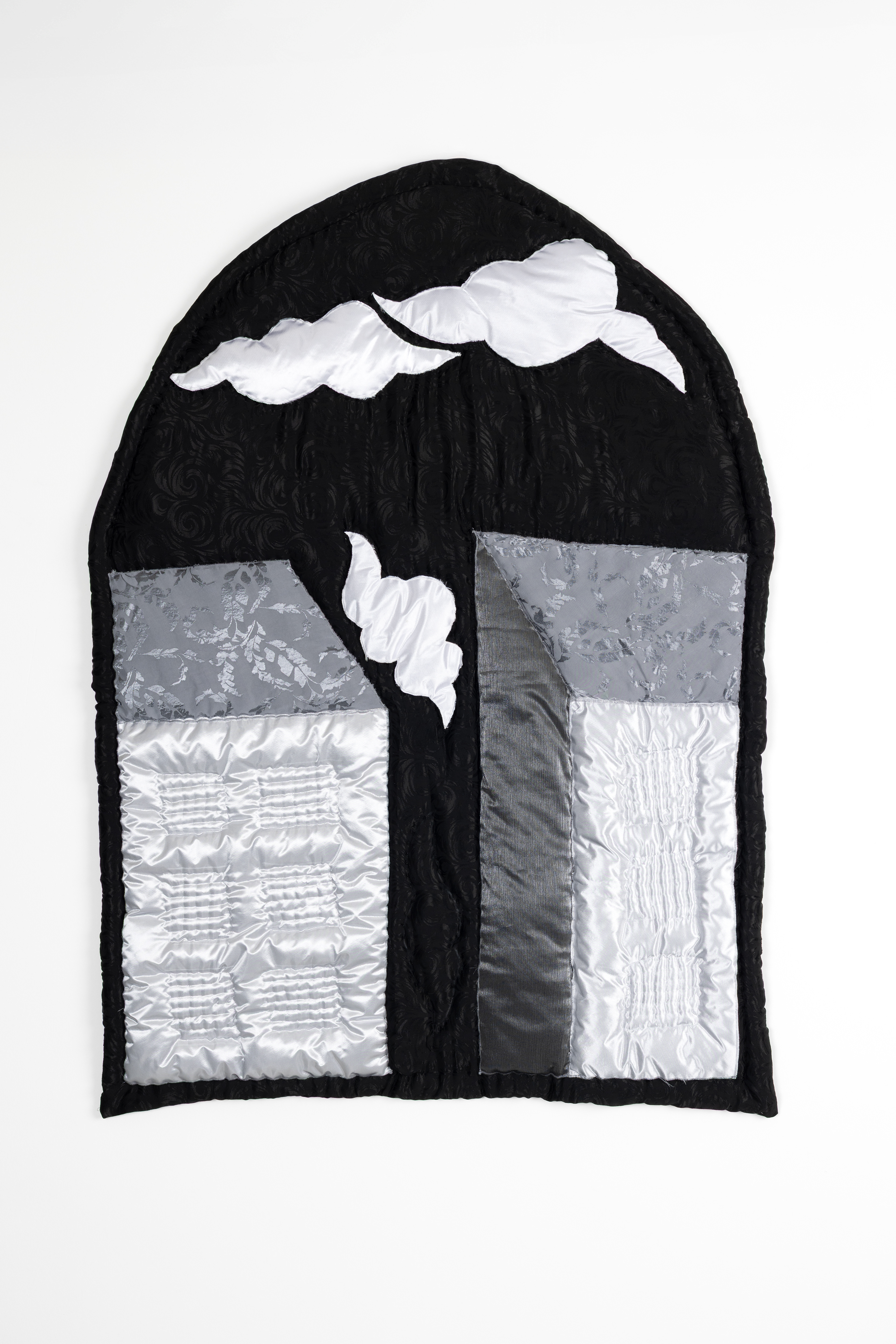
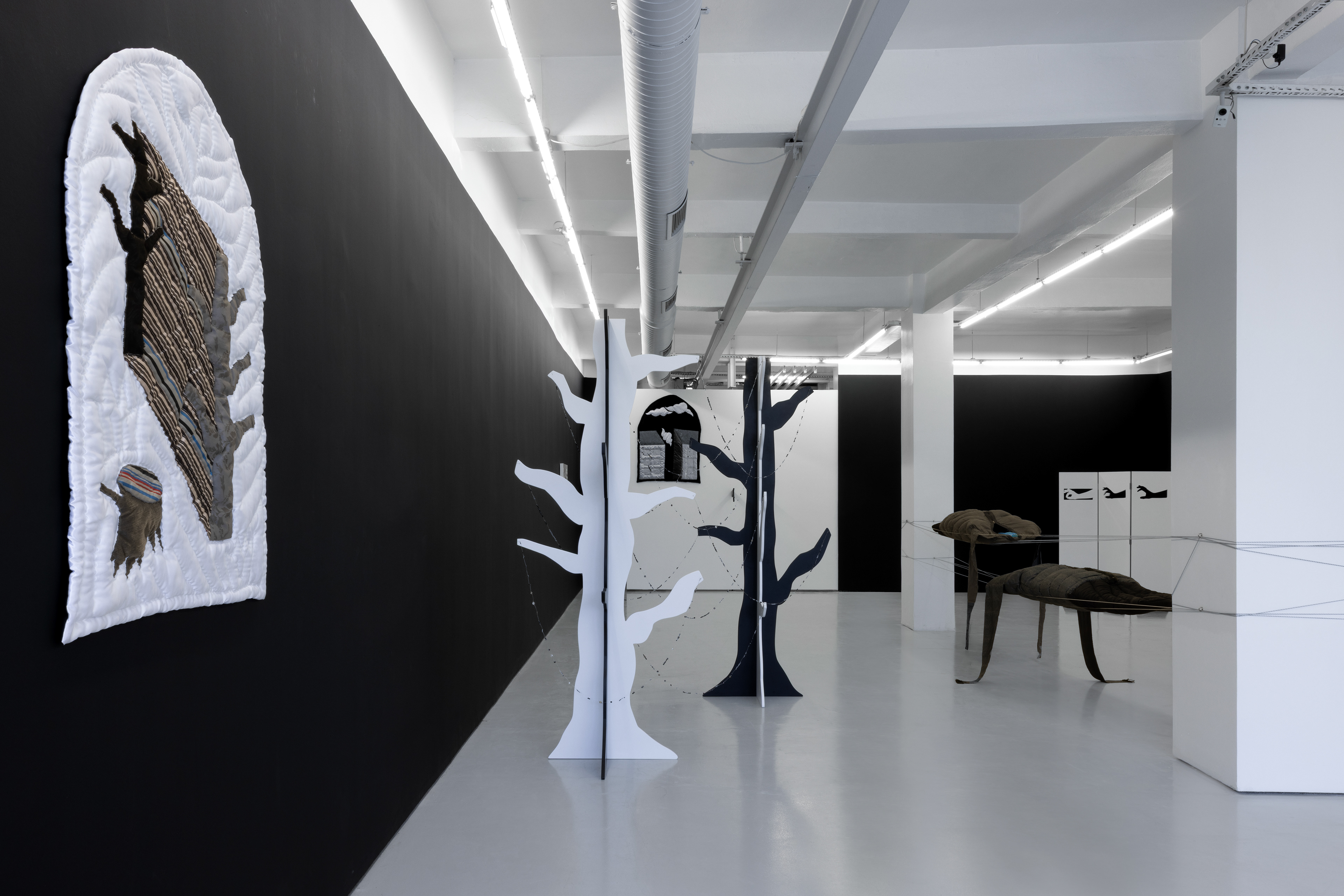
Solo Show: Looking Sideways: A Guide to Misinterpreting Myself at THE PILL gallery, Istanbul, Turkey.
Curated by Asli Seven. 13th Sep - 8th Nov, 2025
Exhibition Text by Asli Seven
Looking Sideways: A Guide to Misinterpreting Myself unfolds as a choreography of doubles and displacements. Conceived as a series of paired works, the exhibition takes as its starting point the image of a coin: two opposing sides, each inseparable from the other and a third dimension that emerges in movement, through the acts of spinning and turning — a speculative “third side” that comes alive in the space between. This logic of oscillation structures the exhibition, where contrast and repetition become strategies to think beyond binary positions.
In an immersive installation unfolding in a strict palette of black and white, each work finds its counterpoint through movement and shifting perspectives. For Shaden, black and white are not absolutes but speculative forces, expanding into negative space and shadow projections, multiplying like quantum patterns. In a world where conflict often prompts the claim that “nothing is black and white,” she asks what other colors we imagine when we dismiss such starkness. Her recent focus on greys, stripes, and monochromes grows from this question, embracing uncertainty as an active condition rather than a deficiency.
This interrogation of perspective is crystallized in A Forest (See into the trees), a work that rethinks the idiom “not seeing the forest for the trees.” For Shaden, the phrase resonates with both artistic process and lived experience: the pull between obsession with detail and the lure of an imagined “whole.” Is the forest anything more than its trees? Does the whole carry a spirit beyond its parts? By isolating forms yet inviting them into collective rhythm, the works stage this paradox, offering no resolution but rather a meditation on perception itself.
Hibernation Nation extends this play of contradictions through the paranja, a garment once worn by women across Central Asia. Vilified and abandoned during the Soviet era in the name of emancipation, the paranja’s present-day return is entangled in debates around identity, faith, and agency. Shaden reimagines it as a sleeping bag stitched from Uzbek and Soviet textiles — two material histories folded into one cocoon. The work resists a singular reading: the cocoon may be protective or restrictive, preservative or inert. Like the paired works across the exhibition, it holds open the possibility of multiple, even opposing, interpretations.
Shaden’s practice sits within a lineage of artists who mobilize absurdity and contradiction as tools of resistance. Her assemblages propose art as a space for healing and renegotiation, while also adopting absurdist strategies and pop art to reframe tradition and renegotiate meanings. Yet her gestures are deeply rooted in the cultural landscapes of Central Asia — in ancestral practices such as plaiting, dowries, and food rituals, and in motifs such as arched windows and everyday objects turned into patterns and pillars.
Looking Sideways: A Guide to Misinterpreting Myself ultimately frames uncertainty not as failure, but as method. By embracing misinterpretation, imperfection, and contradiction, Shadenova resists the drive toward clarity and closure. In doing so, she conjures a poetics of becoming — a space where belonging, memory, and identity remain open to reinvention.
Aziza Shaden proposes a nonlinear understanding of time, conjuring emotional, speculative, and mnemonic worlds shaped by her upbringing, diasporic experience, and a family history entwined with colonial legacies. Her Dadaesque visual language draws from both 20th-century European avant-gardes and contemporary countercultures, employing mirrored images, patterns, repetition, and collage. Motifs reference the evolving landscapes and nomadic practices around the Aral Sea— now under economic and ecological duress—and incorporate ancestral forms of making, including plaits, dowries, and food rituals. Navigating mental dislocation and the psychic residue of migration, her work questions what it means to belong, to remember, and to adapt within and beyond inherited frameworks. Sensitive to past and present forms of invisible female labor, Shaden works with materials such as textiles, hair, wool, soil, stones, garments, tapestry, painting, and animation. Through humor and strategies of the absurd, her poetic assemblages reveal—and attempt to heal— the psychic and material scars of political and economic violence.
Installation Views: Image Courtesy THE PILL, Photography by Nazli Erdemirel
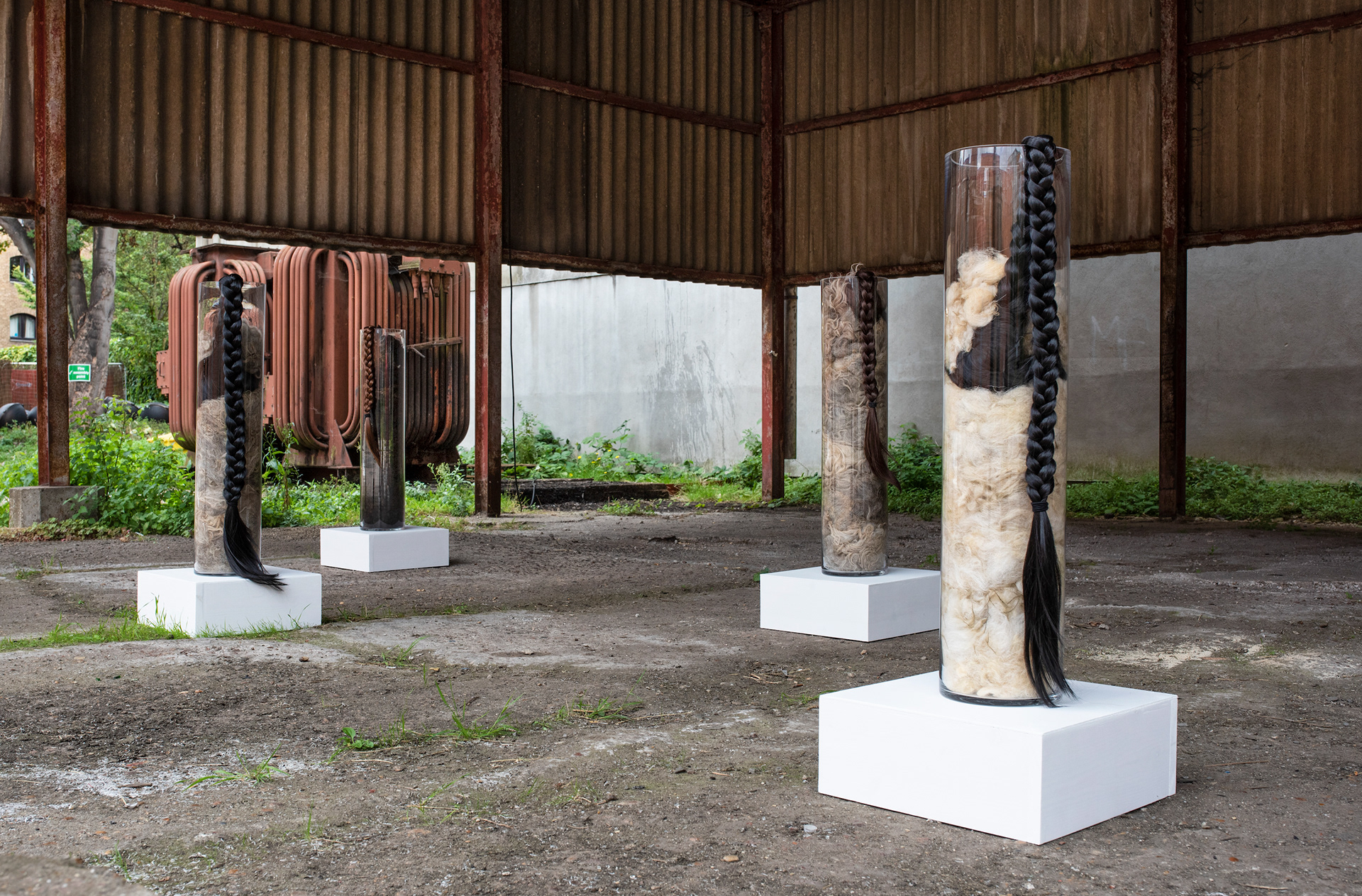
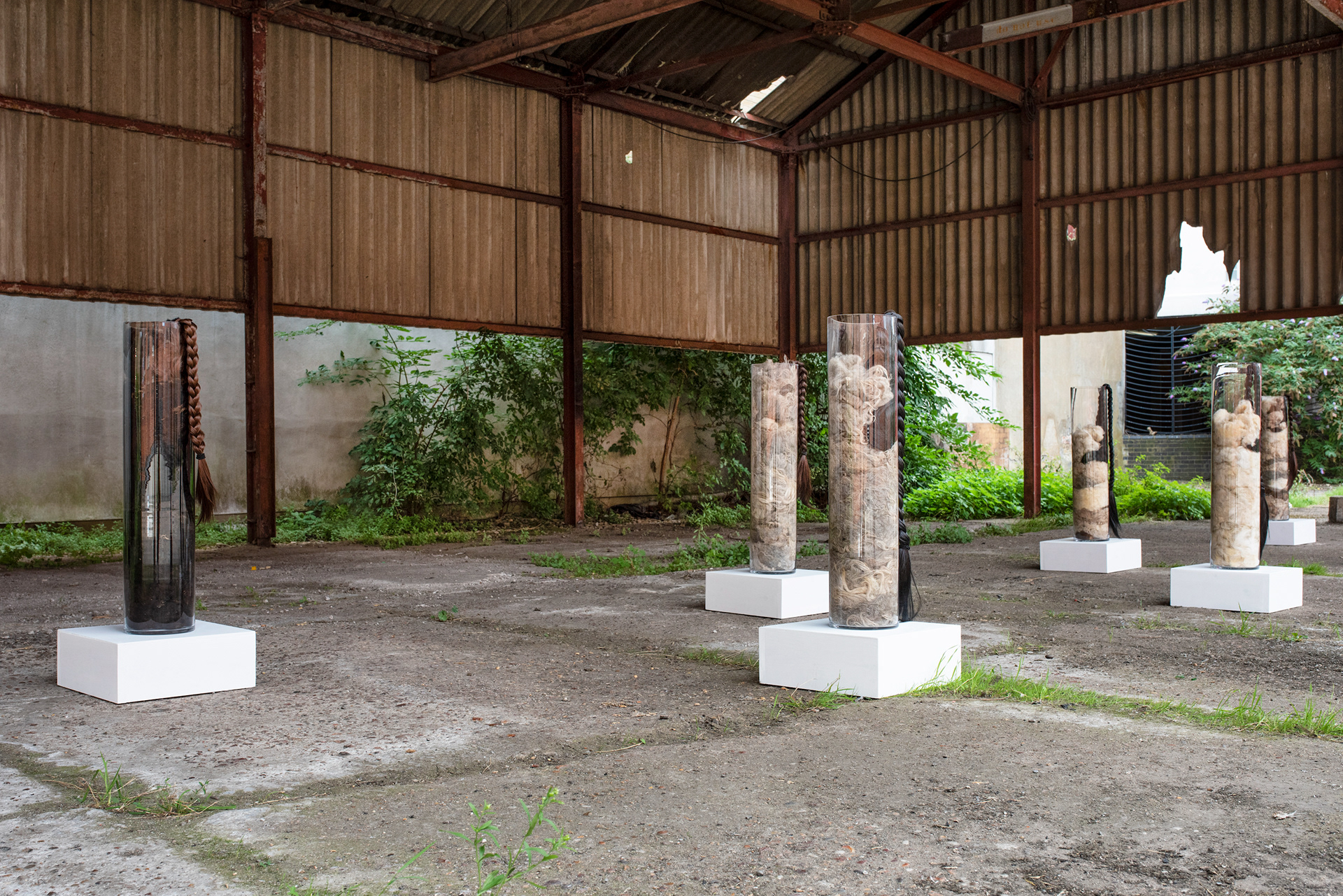
Mothers, 2018
Mixed media installation: Glass cylinders, synthetic hair, and wool
Mothers explores the transformation of women’s roles and identities through the transition from nomadic life to urban living in Kazakhstan. For nomadic women, the home, livestock, and children formed the center of daily life. As keepers of the hearth, they carried significant responsibilities within their communities. In Central Asian culture, a woman’s braid holds deep symbolic meaning; it represents dignity, responsibility, and continuity. Braided hair was both practical and symbolic, allowing women to perform daily tasks while embodying the values passed down through generations.
In this series, I use sheep’s wool, braided hair, and vase forms to evoke the intimate relationship between women and the natural world. Everything that surrounded nomadic women in nature became part of the household and supported family life. The works dedicated to mothers portray braids as towering mountains, symbols of strength, endurance, and ancestral wisdom.
Through Mothers, I reflect on the cycle of life, the transmission of values between generations, and the evolving role of women in contemporary society. The work asks: Where has this transformation led us? What has been gained, and what has been lost? And ultimately, who is the Kazakh woman today?
"Focus Kazakhstan: Post-nomadic Mind" at Wapping Hydraulic Power Station, London, UK
Curated by Indira Dyssebaeva-Ziyabek and Aliya de Tiesenhausen
Photography by Thierry Bal