Selected Paintings
My painting practice explores the intersection of pattern, geometry, and figuration through oil painting. Drawing on my background in graphic design, I am attracted to strong, bold imagery, high contrast, and the use of symbols as visual building blocks. Rather than treating pattern as decoration, I use mosaics, geometric structures, and ornamental motifs to construct figurative images that carry personal and cultural narratives.
The subjects I paint often reflect different stages of my life, becoming a visual record of evolving experiences, memories, and identities. The language of pattern that runs throughout my work is deeply rooted in my upbringing in Central Asia. Growing up in Uzbekistan, I was surrounded by the rich architectural heritage of ancient Zoroastrian and Islamic cultures, where geometry, ornament, and symbolism form an integral part of the visual environment. Through my mother's Kazakh heritage, I am also influenced by traditional Tengri-inspired ornaments, swirling motifs, and decorative forms that have been passed down through generations.
My paintings bring together these diverse cultural influences, combining elements of mosaic, folk ornament, and symbolic imagery into contemporary compositions. While the work embraces a certain naivety and folkloric quality, it also seeks to reinterpret these inherited visual traditions through a modern lens. In this way, my practice becomes a dialogue between past and present, personal history and contemporary experience, creating images that are both deeply rooted and open to new meanings.
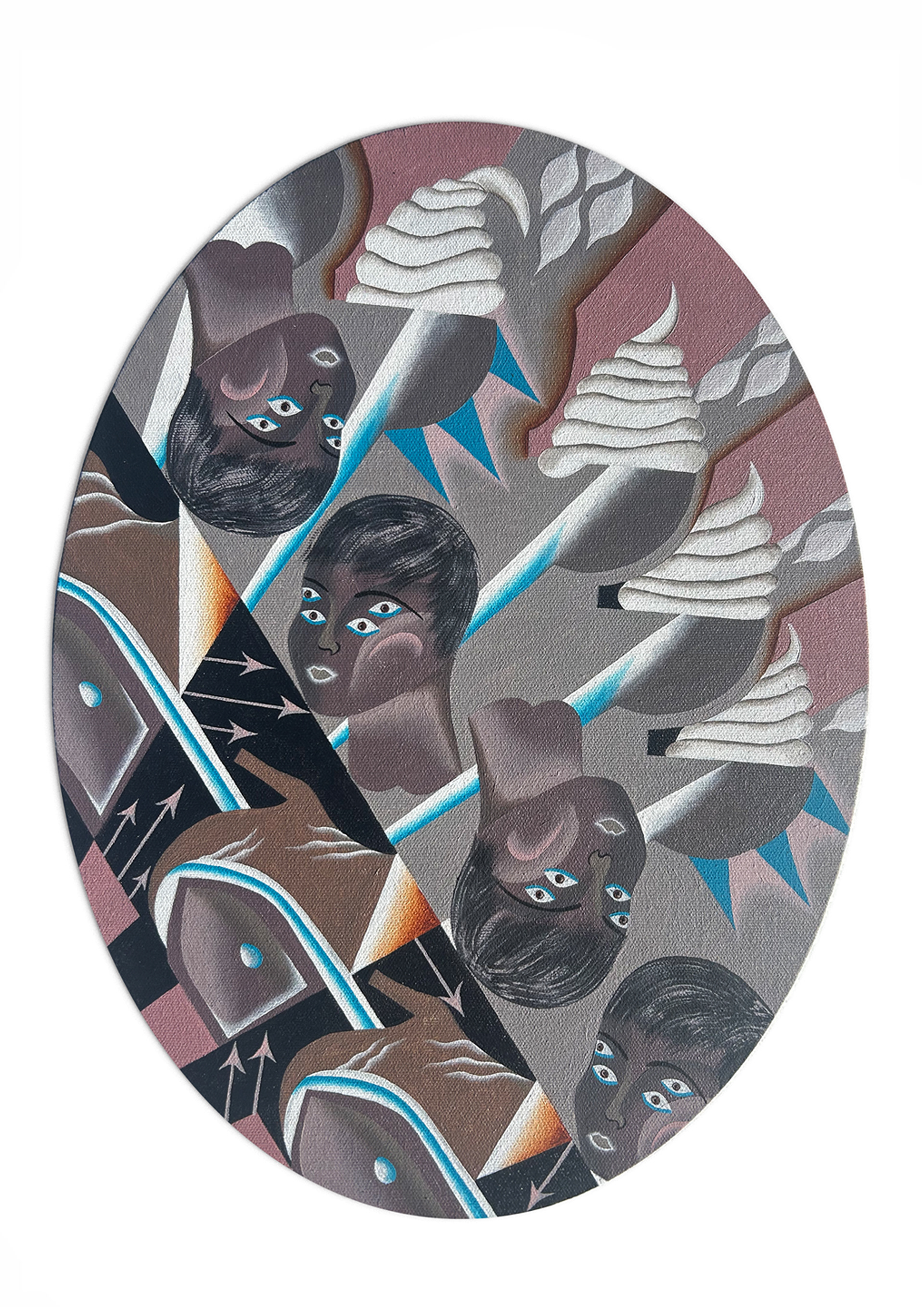
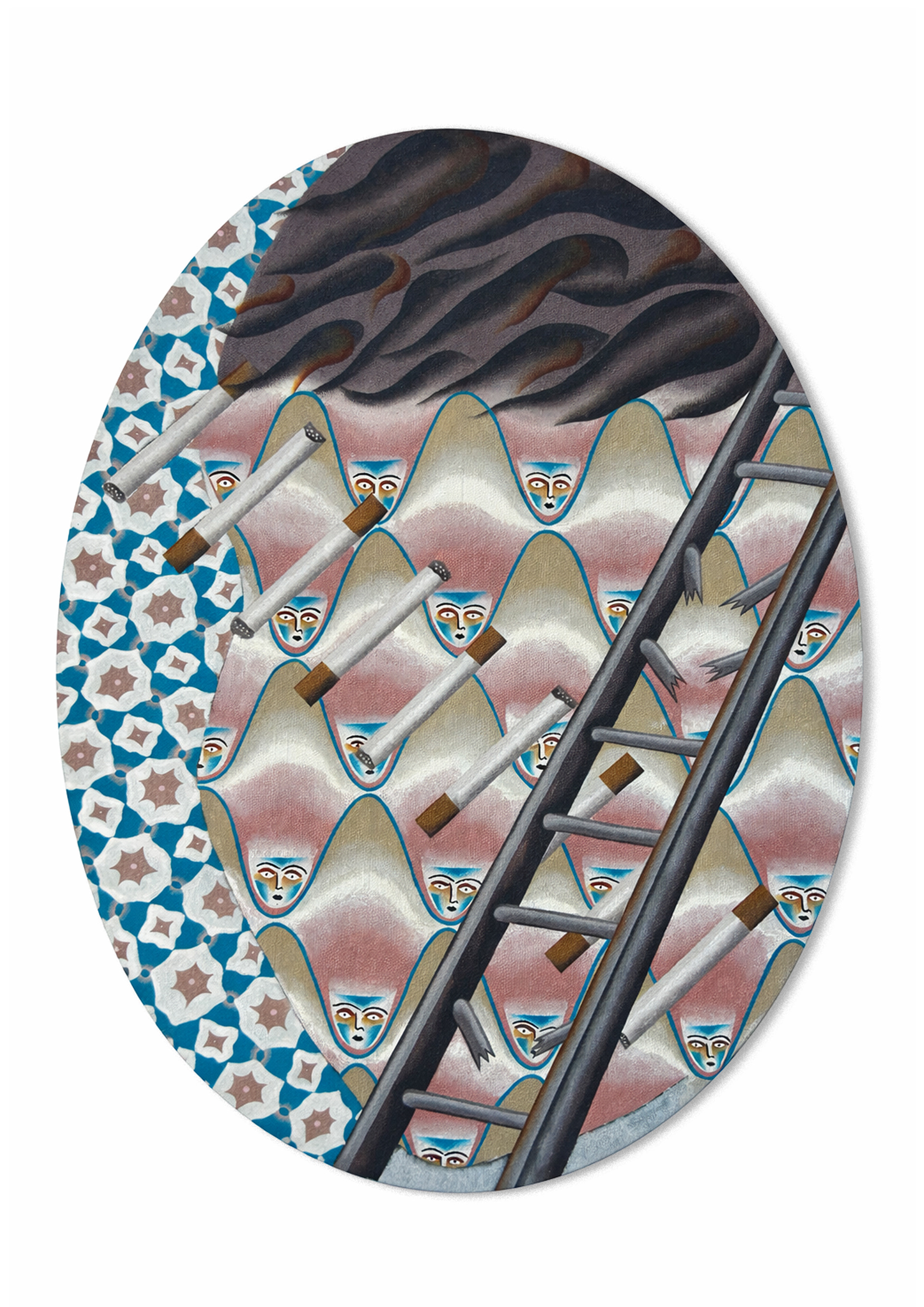

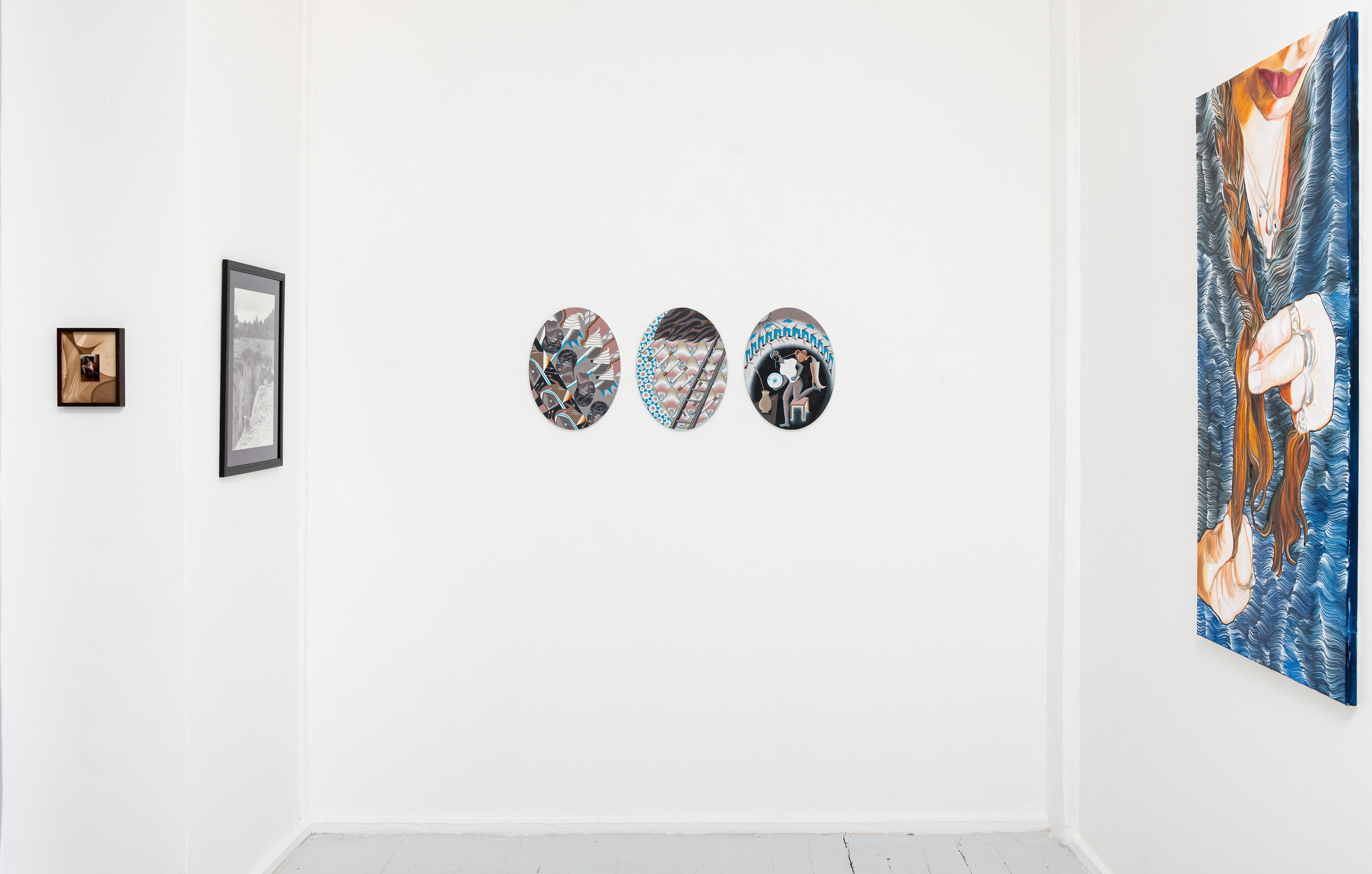
10, 20, 30 (Self-Portraits Triptych), 2026
Oil on canvas, 30cm x 40 cm
10, 20, 30z is a triptych of self-portraits tracing the evolving identity of the artist across three pivotal decades: adolescence, her twenties, and her thirties. Each oval canvas holds a moment suspended in time; together, they form a continuum and a meditation on becoming, on the slow and often contradictory construction of self.
Across the triptych, time is layered rather than linear. Each portrait contains traces of the others, the child’s longing, the young woman’s rebellion, the adult’s introspection. The gaze evolves: from curiosity, to assertion, to awareness. The work suggests that an artist is not formed solely through education or career milestones, but through lived experience and through migration, memory, womanhood, and the ongoing negotiation between cultures.
Ultimately, 10, 20, 30z is an inquiry into becoming, into how a girl shaped by Central Asian roots and Western formative years grows into a woman who holds both within her. Where East meets West, nothing remains untouched. Everything is entangled. And within that entanglement, the artist finds not division, but depth.
Becoming Through Pain, Sensity Studio, Somers Gallery, London, UK. 2026
Curated by Huma Kabakci


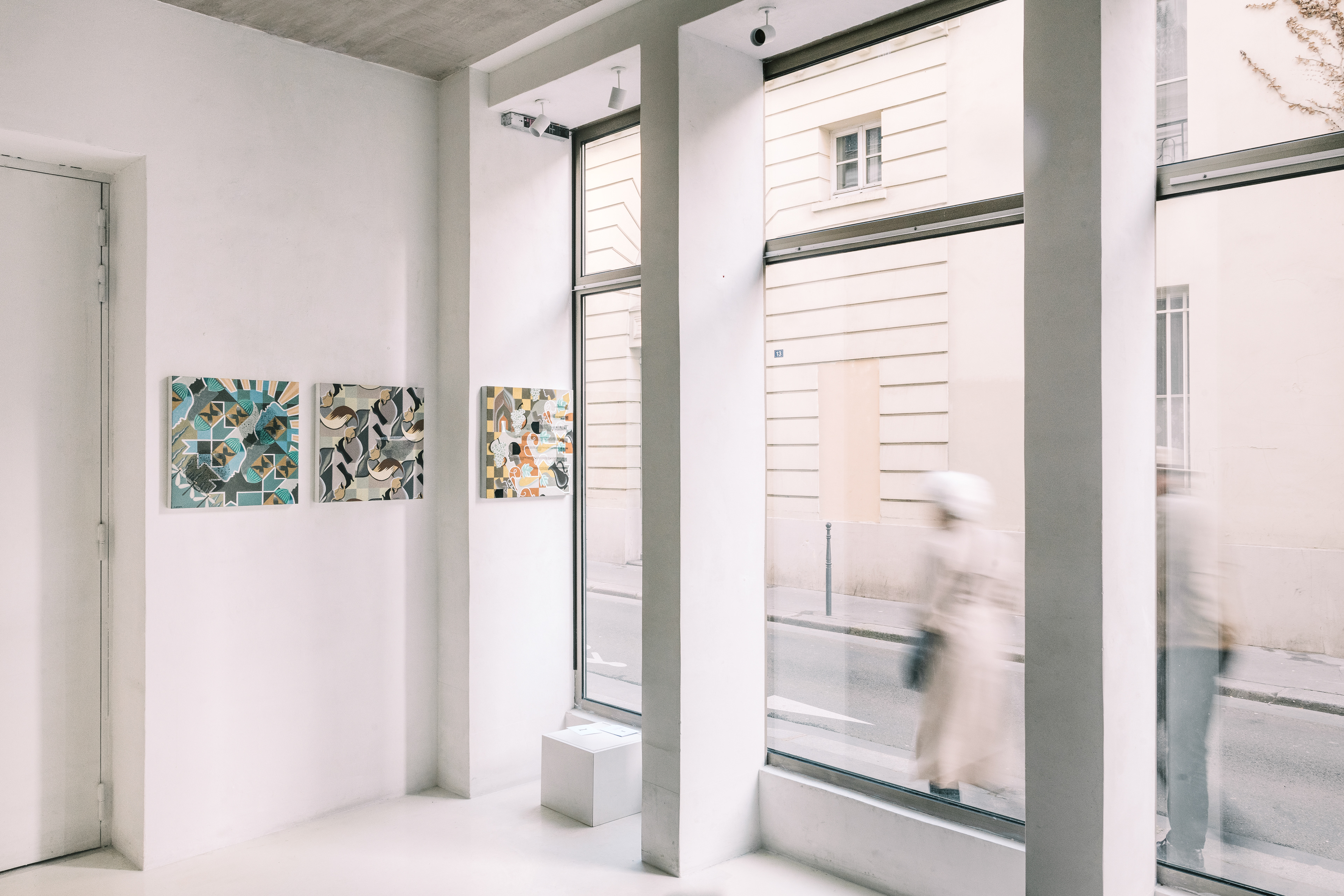
Patterns Series, oil on canvas, 2024
Pattern N2. Kese/Piyola; Pattern N4. Sunset & Sunrise; Pattern N3. Vine Glitch(50 cm × 50 cm)
Installation View "Language Without Alphabet" Curated by Hannah Kriele & Azad Asifovich at Private Institution, Paris, France, 2025
Photo: Dmitry Kostyukov


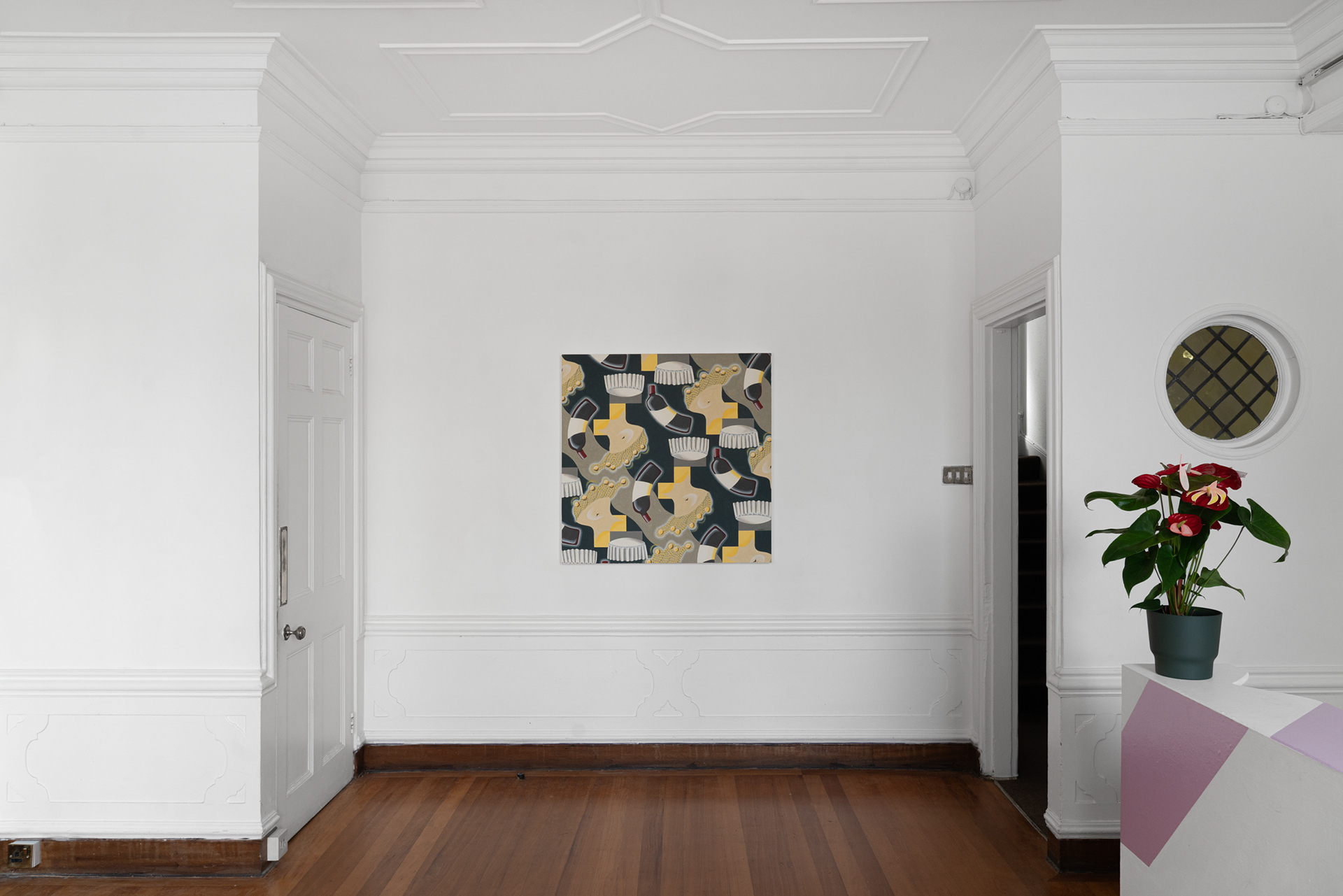
Pattern N1. Girl (100 cm × 100 cm), oil on canvas, 2024
Pattern N 5. Bellydancer (100 cm × 100 cm), oil on canvas, 2024
Installation View "Pleasure of Misuse" - Royal Society of Sculptors, 2025.
Curated by Indira Dyssebaeva-Ziyabek & Maria Hinel
Photography by Vinx Wang

Quilt/Korpe, 2021
200 cm x 120 cm
Oil on canvas boards (Total: 60 Canvas Boards / 20cm x 20cm each)
Text by Indira Dyussebayeva – Ziyabek
Aziza Shaden explores the state of formation and in-between-ness. This state of in-between-ness might remind and send the viewer back to the recent state of the unknown when the world became paralyzed and isolated. Within that moment, the whole and balanced life was something one would long for. Fragmented pieces had to be assembled into one again. This is exactly what Shaden does in Korpe/Quilt, which was created during the pandemic in 2021. Korpes would be common objects in Central Asian households, mostly created by the women of the house. Seeing the layers of korpes installed one on top of the other, at the house of her grandmother, Shaden remembers the fragments of ornaments that would create a kaleidoscopic composition. Nurturing every fragment of memories, the artist weaves a mosaic composition that would comfort her being, as a blanket does for a body.
During the time of nomads, apart from being a useful object at home, serving as a carpet, mattresses or in its direct purpose as a blanket, korpe was also used as a medium of communication. According to specialists, after marriage, when a woman would move away with the new family, she could still send a korpe as a ‘letter’ to her family with a message in the form of ornaments. The message could be decoded/read by her family, and they would know if she lived a happy life or if she was struggling. Ornaments in the nomadic culture were not merely decorative, but used to be writing and had a meaning, most of which has been lost with the start of the soviet period.
Shaden writes in her statement: “I’ve created my own quilt depicting different objects from my life... I use my memories as my protection”. This coded message that the artist has woven into the ‘quilt’ creates a space for viewers to read it, connecting it to their own memories and associations, and wrapping themselves in a patchwork quilt of their own.
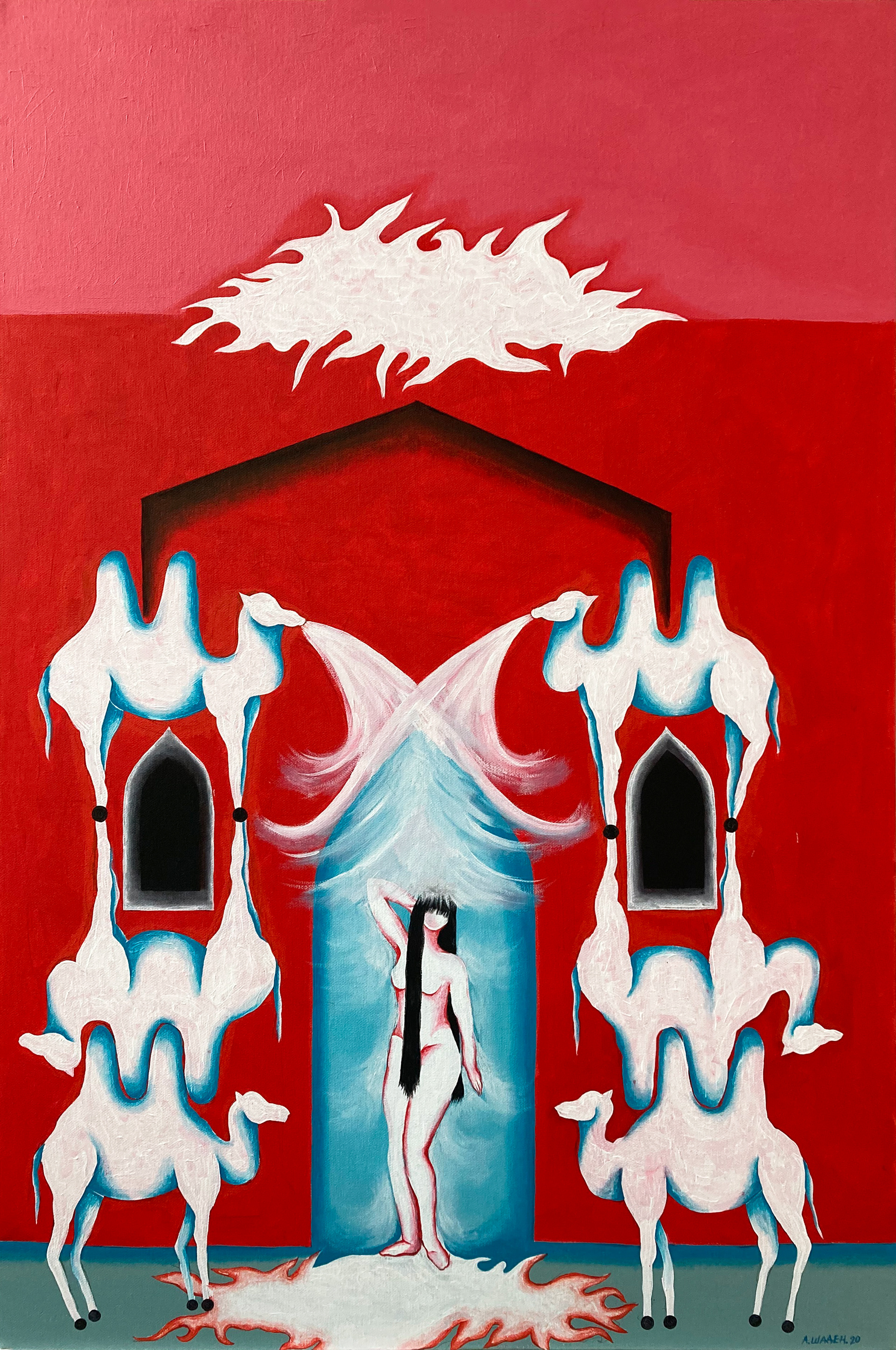
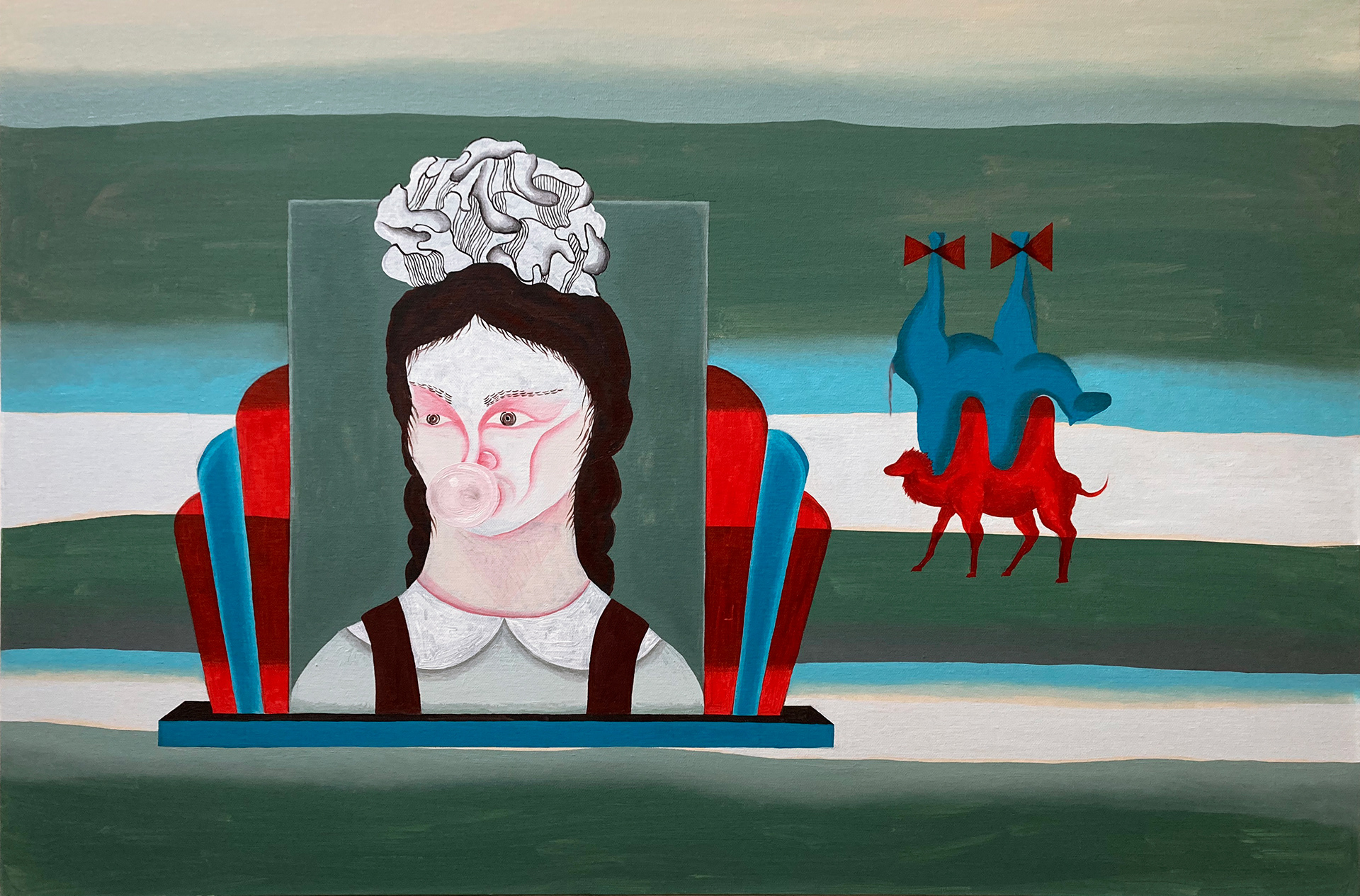


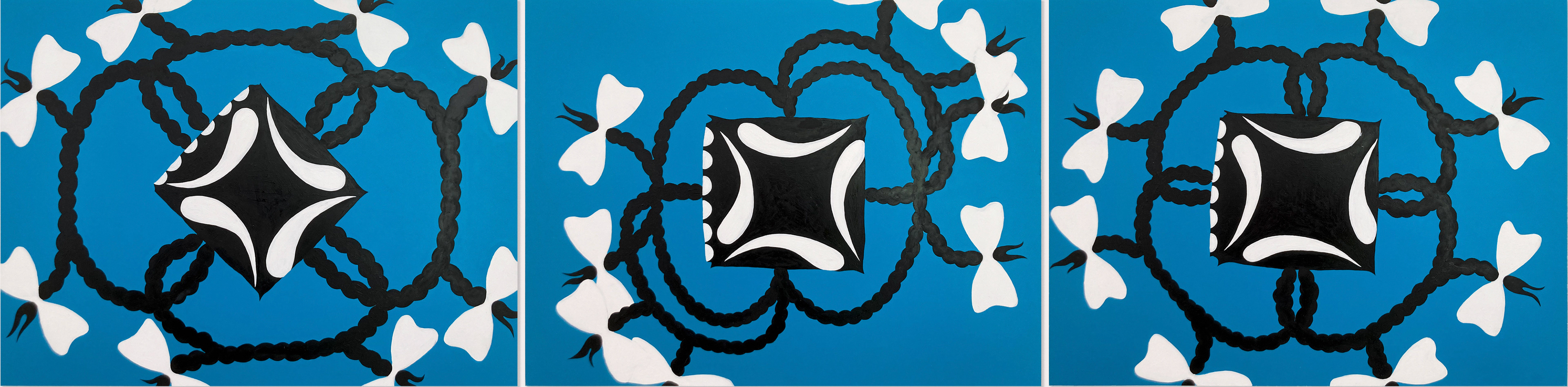
Jewellstan Series, 2020
Oil on canvas, 90 cm x 60 cm
Three Dancing Heads, Triptych, 2021
Oil on gesso panel, 30 cm x 40 cm

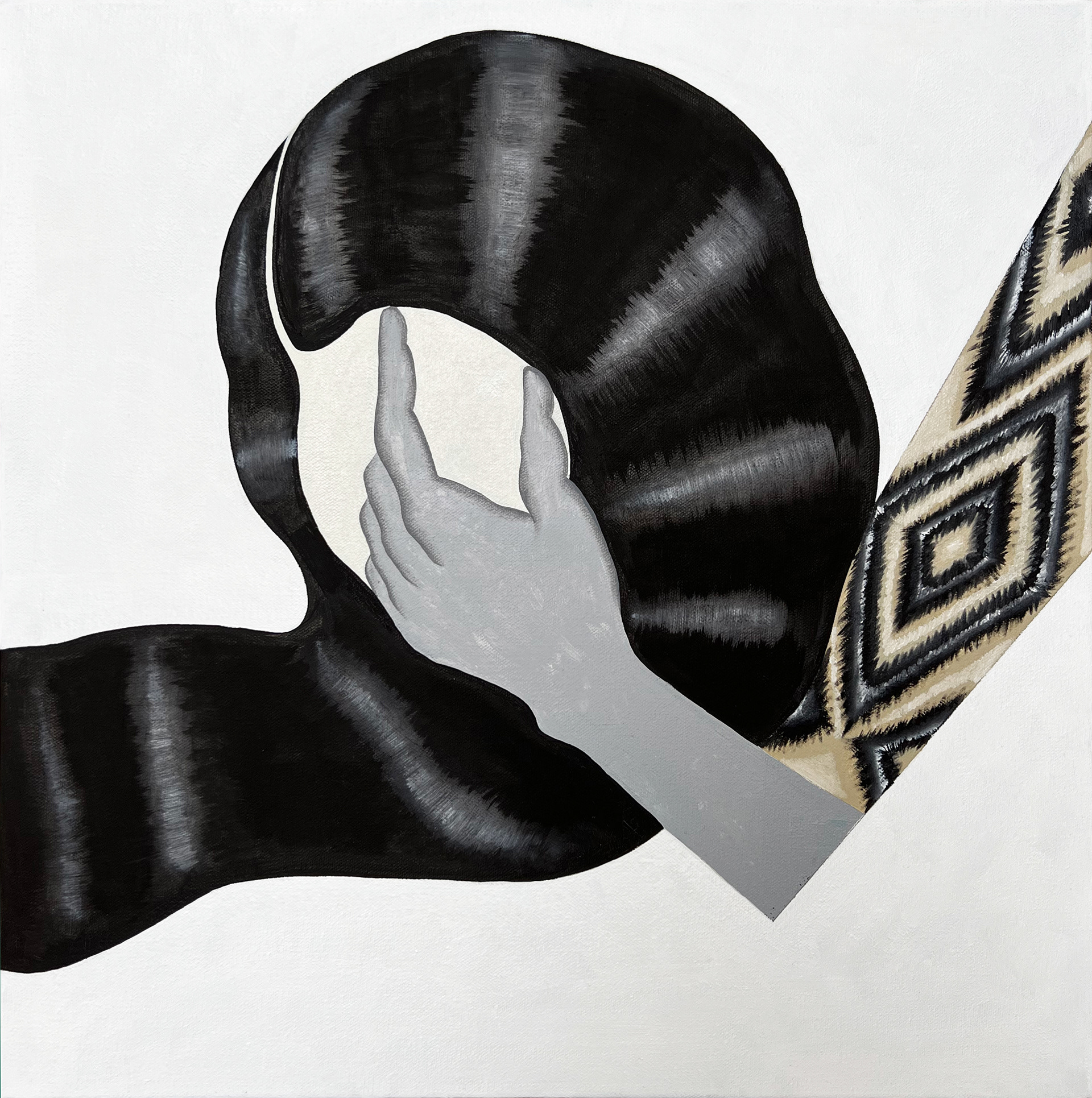


Hand on head (Triptych), (50 cm × 50 cm each) oil on canvas, 2023
Herbarium (100 cm × 100 cm) oil on canvas, 2023
The window (150 cm x 100 cm) oil on canvas, 2019